FR-A5CAƒ/11 · 1/500 · ISO 400Roll /gear-industry
ArtizLab Ships $399 Classic-M 50mm f/1.4 With 0.45m Close Focus
ArtizLab's $399 Classic-M 50mm f/1.4 copies the 1961 E43 Summilux layout but focuses to 0.45m; rangefinder coupling stops at 0.7m, with mirrorless adaptation via third-party adapters.
Processing notes
- ArtizLab lists the Classic-M 50mm f/1.4 at $399, announced November 11, 2026.
- Minimum focusing distance is 0.45 meters versus 1 meter on the 1961 E43 Summilux original.
- Rangefinder coupling operates only from 0.7 meters to infinity; closer work requires Live View or focus peaking.
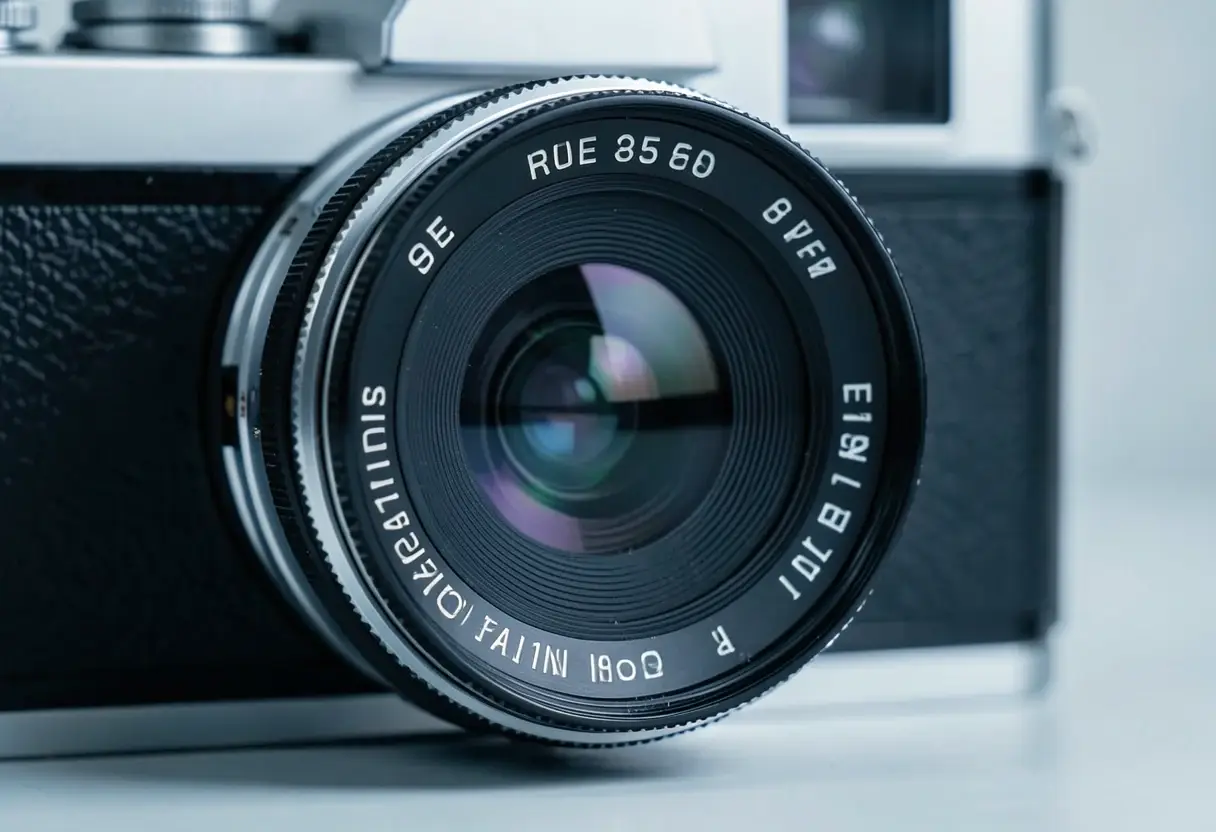
- The lens uses a seven-element, five-group design with a 12-blade diaphragm, 43mm filter thread, and a listed weight of 189.3 grams.
- It mounts on Leica M and adapts to Micro Four Thirds, Fujifilm X, Nikon Z, and Canon RF via third-party adapters.
ArtizLab has priced its Classic-M 50mm f/1.4 at $399, and the number that matters most in the spec sheet is the minimum focusing distance: 0.45 meters, against 1 meter for the 1961 Leica E43 Summilux that inspired the design. The lens, announced November 11, 2026, targets working photographers who want vintage rangefinder character without the close-focus penalty that has long constrained this class of glass.
What does the lens actually change?
The Classic-M borrows its optical layout from the original E43 Summilux: a seven-element, five-group design (a fixed arrangement of glass elements grouped inside the barrel that determines how the lens renders). It pairs that layout with a 12-blade diaphragm and a 43mm filter thread, matching the thread size of the vintage original.
The practical gain is framing flexibility. At 0.45 meters, photographers can shoot portraits, close-up details, and smaller subjects without switching lenses — a real workflow benefit for shooters who work a single 50mm on M-mount bodies.
What is the catch for rangefinder users?
The close-focus figure comes with a mechanical limitation. Rangefinder coupling — the mechanical linkage that lets a Leica M camera's split-image patch show focus — operates only from 0.7 meters to infinity. Subjects closer than 0.7 meters require Live View magnification or focus peaking (an overlay that highlights in-focus edges), where the camera offers those tools.
The lens mounts natively on Leica M-mount rangefinder cameras. It also adapts to mirrorless systems, including Micro Four Thirds, Fujifilm X, Nikon Z, and Canon RF, through third-party adapters. Mirrorless users lose nothing on the coupling front, since they rely on Live View focusing at all distances.
How does the build and rendering compare?
ArtizLab has leaned hard on the styling of the original. Both black and silver versions carry the scalloped focus ring — sometimes called the pineapple pattern — plus a hammer-tone lens hood with a textured crinkle finish. The barrel combines precision-machined aluminum and brass, and the manufacturer lists a weight of 189.3 grams, keeping the compact proportions of the vintage rangefinder form factor.
On rendering, the company says it tuned the lens for natural color, gentle highlight transitions, and smooth background blur, with the 12-blade diaphragm contributing to rounded out-of-focus highlights. Treat those claims as marketing until tested: ArtizLab has not provided independent test results or sample measurements establishing how closely the rendering matches the original Summilux.
Who is this for, and what remains unproven?
At $399, the Classic-M undercuts genuine vintage E43 Summilux copies on the used market by a wide margin while adding closer focusing. The appeal is specific: photographers who want the styling and optical architecture of a classic rangefinder lens, with a minimum focus distance suited to contemporary shooting.
The open question is performance. No measured results exist yet for sharpness, bokeh character, or color response relative to the 1961 original, and that comparison is what will determine whether the lens earns a place in a working kit or remains a styling exercise. Independent testing against vintage E43 glass should settle the question once review units reach photographers.
via bhphotovideo.com (Original)
More from Amara Osei
Show full bio
Market editor covering companies, deals and strategy in professional photography industry at Photo Trade Wire.
129 articles