FR-8934ƒ/11 · 1/60 · ISO 400Roll /gear-industry
Camp Snap Sues Klik Maker Over Trademark as Screenless Camera Market Heats Up
Camp Snap's parent Unplug Co. LLC is suing Klik maker Ygd Ecommerce for trademark infringement, citing over $14 million spent on advertising to build the brand competitors now copy.
Processing notes
- Unplug Co. LLC (Camp Snap) sued Ygd Ecommerce LLC, maker of the Klik camera, in September 2026 for trademark infringement under the Lanham Act.
- Camp Snap says it has spent over $14,000,000 on advertising, much of it on social media.
- A separate lawsuit against DigiFilm was reportedly thrown out and closed in January of this year.
- Echolens, Flashback, Fujifilm and others have not been sued by Camp Snap so far.
Camp Snap's parent company, Unplug Co. LLC, has sued the maker of the Klik camera for trademark infringement, false designation of origin and unfair competition under the Lanham Act (the core US federal statute covering brand and trade dress disputes), according to DocketNexus. The suit, filed in September 2026, remains ongoing. A separate action against DigiFilm was closed in January of this year.
The filing puts a number on what the screenless camera boom now costs to sustain. Camp Snap has spent, in the lawsuit's own words, "over $14,000,000 on advertising and has advertised on social media platforms to the general consuming public." That figure matters for working photographers and small photo businesses watching this segment: the brand equity at stake in a category built largely on styling and interface choices, not sensor technology.
What does the lawsuit actually claim?
This is not a patent or licensing dispute comparable to Nikon's recent action against Viltrox, where the remedy was a licensing fee. Camp Snap is asserting trademark rights. The claim is that competitors are free-riding on the visual identity its advertising built.
The target in the live case is Ygd Ecommerce LLC, which makes the Klik camera. Independent reviews have not tested the Klik, and its maker has no established press relationship with the reviewing outlet that broke down the docket. Even so, the product's exterior closely resembles the Camp Snap original at a glance — the observation that anchors the trade dress argument.
The earlier DigiFilm case took a different shape. DigiFilm differentiated itself with a physical dial for switching image filters, a feature Camp Snap itself later adopted on the Camp Snap Pro and the Camp Snap 2. That lawsuit was reportedly thrown out earlier this year and formally closed in January.
Who else is in the category?
Several players have not been touched by litigation:
- Echolens, whose product resembled the Camp Snap Pro closely but suffered shutter lag issues; the brand did not survive.
- Flashback, whose 35V2 uses a film advance wheel and a companion app to offload "digital film rolls" and change image looks — a materially different workflow.
- Fujifilm, whose offerings differ from Camp Snap's in both operation and app interface, an area where Camp Snap remains weak.
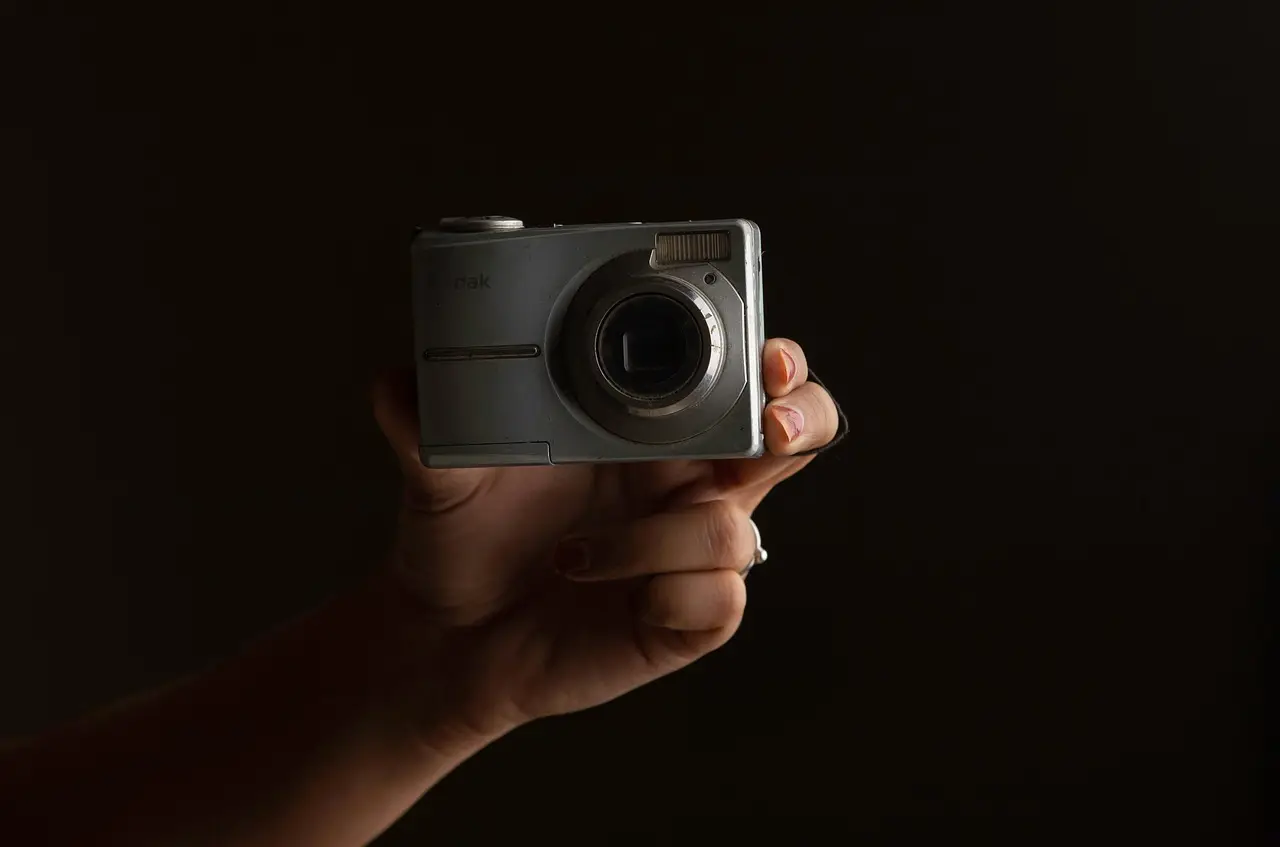
Kodak's Charmera and Yashica's Funtastic use similar sensors, and screenless digital cameras date back to at least the 2000s, including shot counters that predate the current wave. Camp Snap did not invent the category. What it added was a more stylish design, USB-C, multiple colorways, and firmware the community is encouraged to modify.
Why should photo businesses care?
The commercial question underneath the litigation is differentiation. Screenless point-and-shoots currently compete on aesthetics and minor interface choices, because the underlying sensors are broadly similar. Trademark suits are one way a market leader polices that thin layer of distinction — and a $14 million ad spend is the evidence that the look, not the guts, is the asset.
The risk, as commentators have noted, is that the segment collapses into the pattern of Japanese camera manufacturers: similar bodies, shared components, minimal variety. For retailers, reviewers and accessory makers, that would mean a commodity market with price as the only lever. For Camp Snap, defending trade dress is cheaper than defending a patent it does not hold.
Whether the Klik case survives where the DigiFilm case failed will signal how much protection trade dress actually offers in this category — and how much room remains for competitors to build cameras that look nothing like the market leader's.
via The Phoblographer (Source)
More from Amara Osei
Show full bio
Market editor covering companies, deals and strategy in professional photography industry at Photo Trade Wire.
116 articles