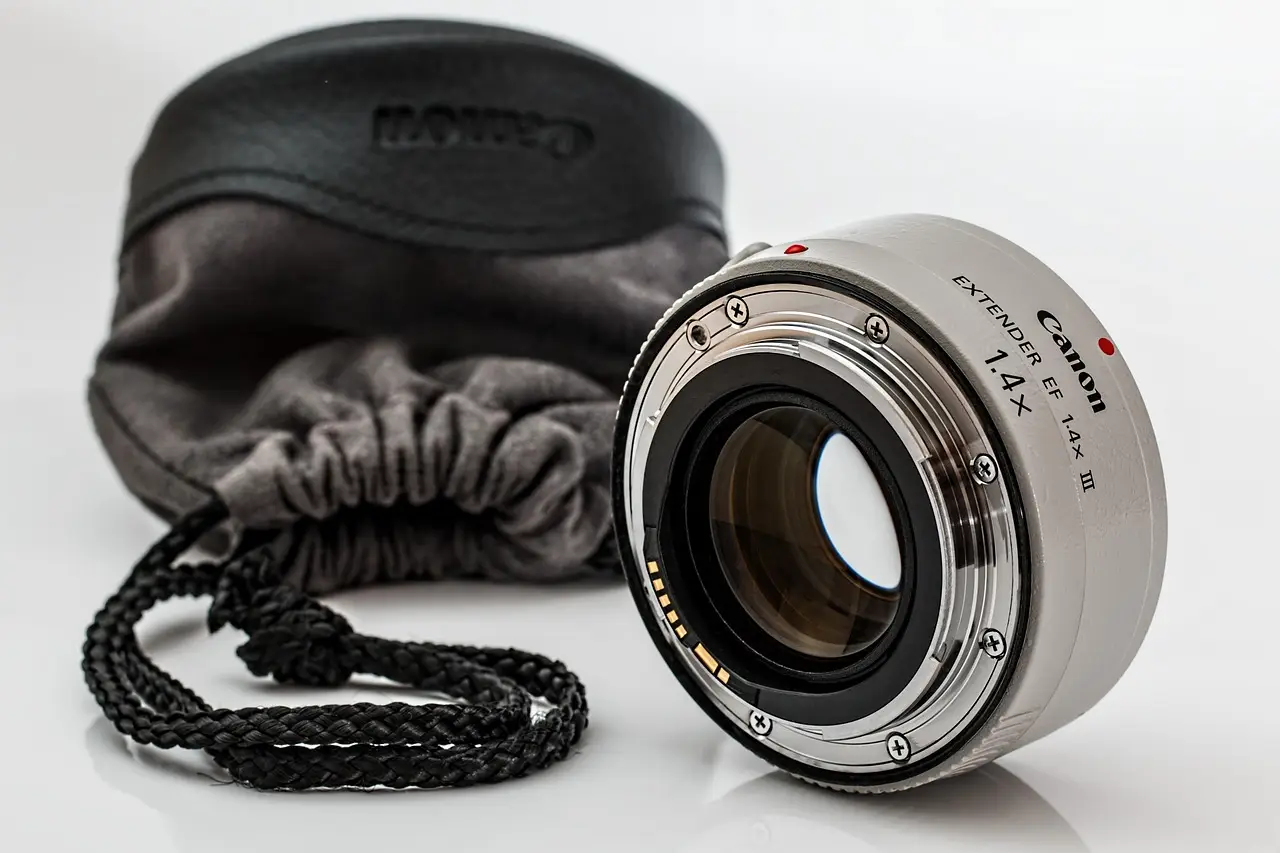
Canon Warns RF 1.4x and 2x Extenders May Not Lock Lenses Properly
Canon's service notice covers the RF 1.4x and 2x Extenders, where a stiff release lever may fail to lock lenses in place. Free repairs are offered via Canon USA, with no serial ranges disclosed.
Processing notes
- Canon issued a service notice for the RF 1.4x and RF 2x Extenders over a locking-mechanism flaw
- A stiff or sticky lens release lever may leave an attached RF lens unlocked and able to detach during use
- Free inspection and repair confirmed through Canon USA; no affected serial number ranges published
- The notice is a service advisory, not a full product recall
Canon has issued a service notice for its RF 1.4x and RF 2x Extenders, warning that a faulty locking mechanism could allow an attached lens to detach during use — a failure mode that typically hits hardest on the most expensive glass in a working kit.
The problem centers on the lens release lever. Canon says the lever may become stiff or fail to operate smoothly, which means the attached RF lens might not lock correctly into position and could come loose mid-shoot. The company advises owners to verify that the lens is securely mounted and that the release lever moves freely, without catching or resistance.
What does this change for working shooters?
These extenders sit in exactly the workflows where a dropped lens does the most damage. The 1.4x adds 40% to focal length; the 2x doubles it. Both are staples for wildlife, sports and action photographers running heavy super-telephotos — lenses that routinely cost several thousand dollars. A lens separating from an extender under load, on location, is a repair bill and a lost assignment in one motion.
The practical move is a pre-shoot check. Confirm the mount is fully locked. Test the release lever. It takes seconds. Canon hasn't said how widespread the issue is, and it hasn't published a range of affected serial numbers, so there's no way to self-identify a safe unit. Treat every copy as unverified until inspected.
Repair terms and availability
This is a service notice, not a full recall. Canon has confirmed affected customers can request an inspection and repair, with free repairs explicitly offered through Canon USA. Owners outside the US should route through their regional Canon service center. If the release lever feels unusual in any way — stiff, gritty, inconsistent — stop using the extender and send it in rather than risk continuing on a paying job.
A few points worth noting for scheduling:
- No affected serial number ranges have been published, so unit-level screening isn't possible.
- Free repair is confirmed for Canon USA customers; regional terms may vary.
- Canon positions this as inspection-and-repair, meaning turnaround times will likely differ from a formal recall program.
How to read the risk
Canon's notice doesn't quantify failure rates, so the actual probability of a lens detaching remains unknown. But the asymmetry is clear: the check costs nothing, the failure costs a telephoto. For pros carrying RF extenders as standard kit in wildlife or sports coverage, the sane play is to inspect the release lever now, book a service slot if anything feels off, and carry a fallback body-lens pairing until the extender comes back confirmed.
The full details, including contact routes for service, are on Canon's official service notice page.
via digitalcameraworld.com (Source)
More from Nathan Brooks
Show full bio
Correspondent covering regulation, policy and their impact on professional photography industry at Photo Trade Wire.
150 articles