Metalenz Buys PxE Imaging, Betting on a Bayer Filter Alternative
Metalenz has acquired PxE Imaging, whose Holocoder claims 2.5x more light to sensors by replacing the Bayer filter — but no phone maker or launch date has been named.

Processing notes
- Metalenz acquired Israeli startup PxE Imaging; deal terms undisclosed; announced Nov. 13, 2026.
- PxE's Holocoder claims 2.5x more light to a standard image sensor by replacing the Bayer filter.
- Metalenz says it has shipped over 300 million metasurface optics in consumer devices.
- No smartphone maker, product or release date has been announced for the technology.
- Holocoder captures color and depth in one sensor via a hardware layer, no separate depth camera.
Metalenz has acquired Israeli startup PxE Imaging, adding sensor technology that the companies claim delivers 2.5 times more light to a standard image sensor than the Bayer filter architecture used in virtually every smartphone camera today. Terms were not disclosed. No device maker has committed to the technology, and no launch date exists — the deal, announced Nov. 13, is a components play, not a product.
For working photographers, the stakes are simple: smartphone low-light performance drives client expectations everywhere from event coverage to editorial delivery. Any real gain in sensor efficiency affects what clients assume a phone can do.
What does the Holocoder replace?
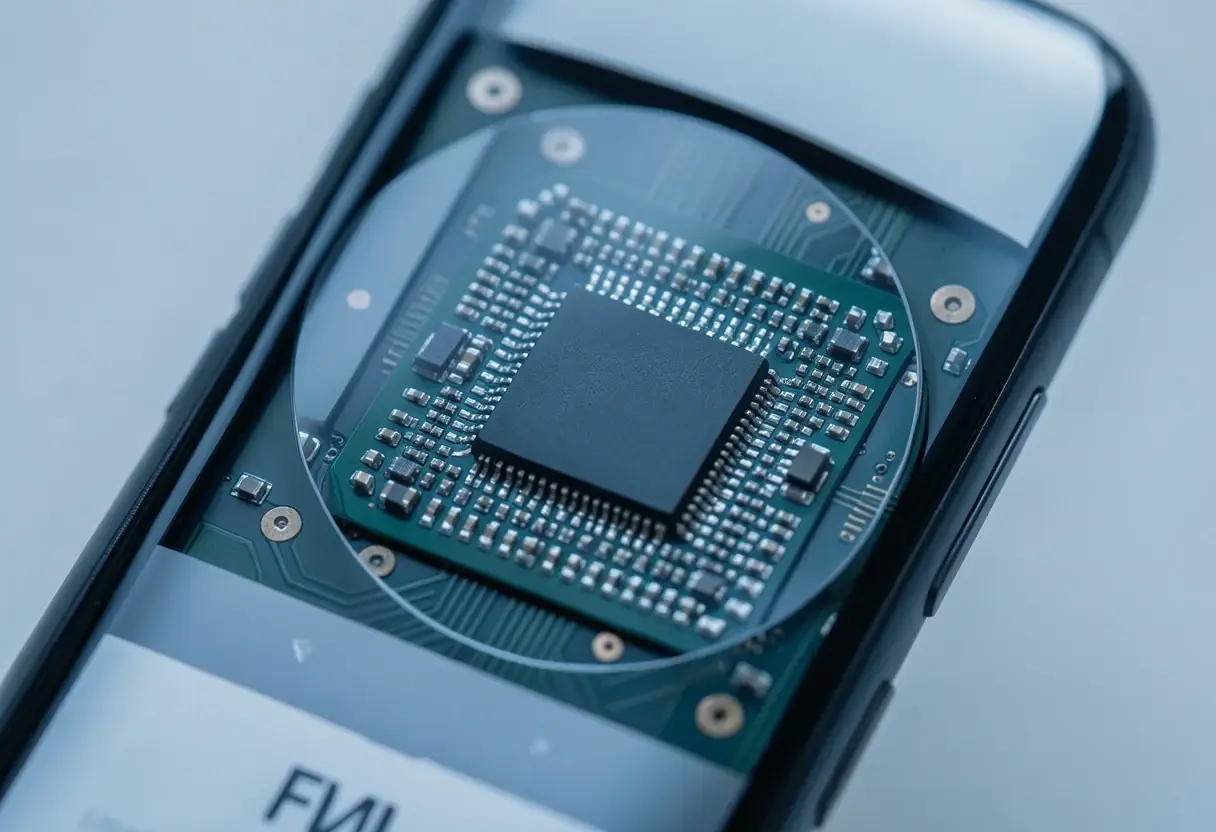
Most digital cameras, phones included, use a Bayer color filter array over the sensor. It splits incoming light into red, green and blue so the camera can reconstruct color, but it absorbs a substantial share of the light hitting the sensor. That lost light is the tax every phone camera pays.
PxE says its Holocoder eliminates the Bayer filter by using the wave properties of light to sort incoming information without absorbing it the same way. The claimed result: 2.5x more light reaching a standard sensor. That's the manufacturer's number, not a measured one — the announcement includes no independent image-quality tests and no comparisons against shipping smartphone sensors. Treat the figure as a claim until benchmarked silicon appears.
Color and depth from one sensor
The Holocoder also captures depth information alongside color in the same exposure, using a hardware layer patterned directly onto the image sensor. No separate depth camera. No full software reconstruction.
That matters for phone architecture. Current devices fuse data from multiple cameras plus computational photography to build portrait effects and estimate subject distance. Combining color and depth in one capture could cut both the extra hardware and some of the processing overhead — a cost and power argument that will interest handset makers more than a spec-sheet one.
Metalenz says the spatial data is already aligned with the visible image, which points beyond photography. Robotics, drones and other machines that interpret surroundings could use it directly.
What Metalenz already ships
The buyer is not a lab curiosity. Metalenz says it has shipped more than 300 million metasurface optics in consumer devices — a volume that puts it firmly in the phone supply chain. Its PolarEyes platform captures polarization information, letting systems distinguish materials by how they interact with light. One application is Polar ID, a facial authentication system built for consumer devices.
Stacking PxE's Holocoder on top of metasurface optics and polarization sensing could give compact camera modules access to color, depth, polarization and spatial data through one hardware path. Metalenz argues this also lets AI systems run more efficiently, because less information needs to be reconstructed in software.
Measured results versus marketing
What does this change for photographers today? Nothing yet. The announcement confirms no smartphone camera product, no release date and no performance figures from finished devices. The acquisition terms stay private. The Holocoder is a promising sensor architecture, not a feature anyone can spec into a purchase decision.
If the light-sensitivity claims survive contact with real camera modules, manufacturers gain headroom to improve low-light capture without defaulting to bigger sensors or heavier computational processing — something beyond the annual megapixel bump. Until a named handset ships with it, the only verifiable fact is that a 300-million-unit optics supplier just bought a Bayer filter alternative.
via bhphotovideo.com (Original)
More from Nathan Brooks
Show full bio
Correspondent covering regulation, policy and their impact on professional photography industry at Photo Trade Wire.
150 articles