FR-2627ƒ/4 · 1/250 · ISO 400Roll /gear-industry
Nikon's $13,996.95 120-300mm f/2.8 Goes Toe-to-Toe With 400mm and 600mm Primes
Nikon's new 120-300mm f/2.8 TC VR S lists at $13,996.95 — lighter than the 400mm and 600mm primes, with 6.5-stop claimed VR and a 168-420mm extended range.
Processing notes
- Nikon NIKKOR Z 120-300mm f/2.8 TC VR S is priced at $13,996.95, versus $12,696.95 for the 400mm f/2.8 and $14,696.95 for the 600mm f/4.
- The zoom weighs 2,735g — 215g lighter than the 400mm f/2.8 and 525g lighter than the 600mm f/4.
- Built-in 1.4x teleconverter gives the zoom a 168-420mm f/4 range; the 600mm f/4 reaches 840mm f/5.6.
- Nikon claims up to 6.5 stops of VR for the zoom, but only with a compatible Synchro VR camera system.
- The zoom's minimum focus is 0.98m at 120mm with a 0.25x reproduction ratio with TC at 210mm.
Nikon's new NIKKOR Z 120-300mm f/2.8 TC VR S carries a list price of $13,996.95 — that's $1,300 more than the 400mm f/2.8 TC VR S ($12,696.95) and $700 less than the 600mm f/4 TC VR S ($14,696.95), according to a specification comparison published October 31 by Nikon Rumors. The three-lens face-off lands at the exact decision point working sports and wildlife photographers now face: one zoom that covers everything, or two primes that each do one thing better.
What does each lens actually offer?
All three are S-line telephotos with the same 1.4x built-in teleconverter, the same Silky Swift VCM autofocus motor, nine diaphragm blades, and internal focusing. The differences are in reach, speed, and weight:
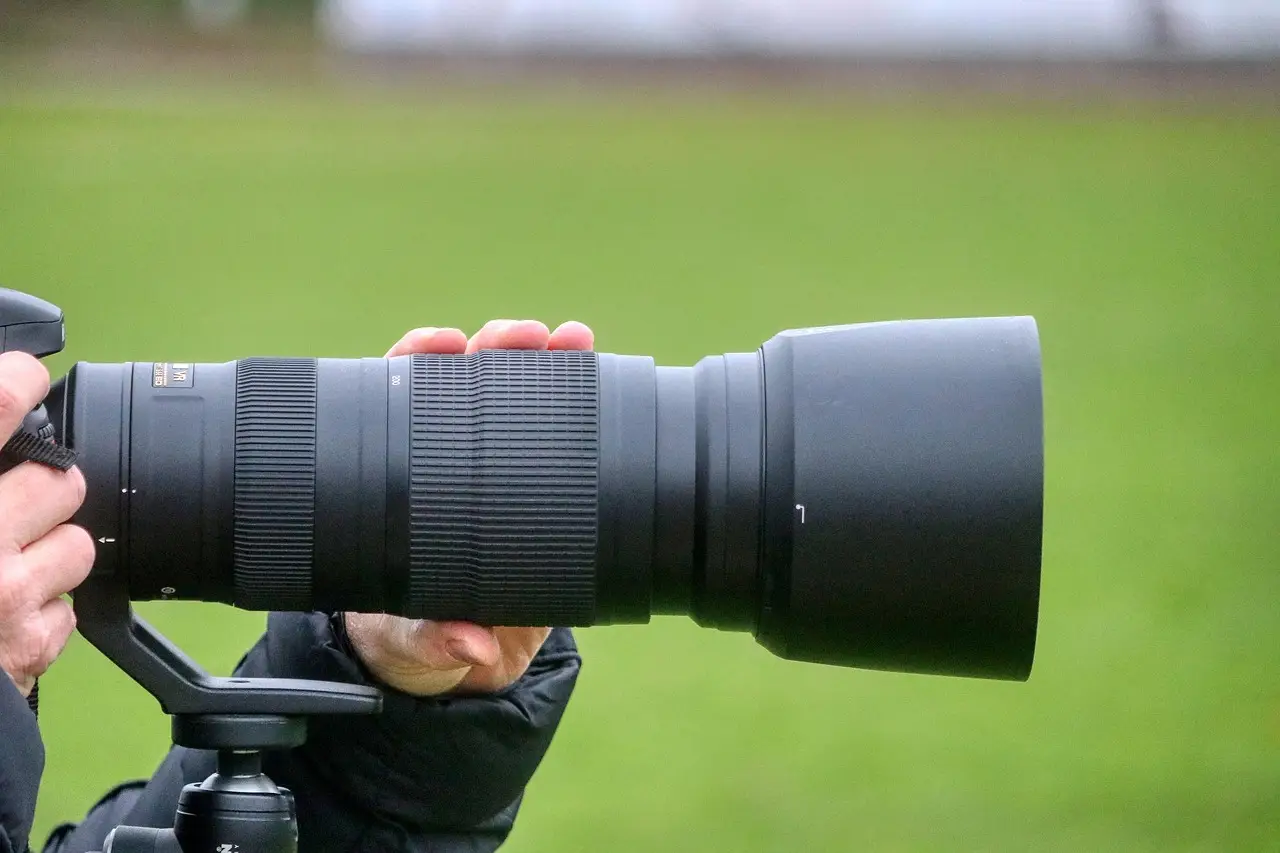
- 120-300mm f/2.8 TC VR S — covers 120–300mm natively at f/2.8, extending to 168–420mm at f/4 with the teleconverter engaged. Weighs 2,735g (6.03 lb), the lightest of the three. Also the only one with internal zoom.
- 400mm f/2.8 TC VR S — fixed 400mm at f/2.8, switching instantly to 560mm f/4. Weighs 2,950g (6.50 lb).
- 600mm f/4 TC VR S — 600mm at f/4 or 840mm at f/5.6 without any external converter. The largest and heaviest at 3,260g (7.19 lb).
The zoom also carries the most complex optical formula: 30 elements in 24 groups, including 3 ED, 1 Super ED, 2 fluorite, 2 SR, and 1 high refractive index element. The 400mm runs 25 elements in 19 groups; the 600mm, 26 in 20.
How close is the reach gap in practice?
Closer than the focal-length labels suggest. With its converter deployed, the zoom reaches 420mm at f/4 — just 5% short of the 400mm prime's native field of view, though a full stop slower than that lens's f/2.8. Engage the prime's own converter and it hits 560mm f/4; the 600mm tops out at 840mm f/5.6, a range the zoom simply can't touch.
Minimum focus tells a similar story of flexibility versus specialization. The zoom focuses to 0.98m at 120mm, stretching to 2.0m at 300mm, and hits a maximum reproduction ratio of 0.18x at 150mm without the TC — 0.25x at 210mm with it. The 400mm prime manages 2.5m and 0.17x (0.23x with TC); the 600mm, 4.3m and 0.14x (0.20x with TC).
What about stabilization claims?
Here's where buyers should read the fine print. Nikon states the 120-300mm delivers up to 6.5 stops of VR, but only with a compatible Synchro VR camera system — the company's own qualification, not an independent measurement. The 400mm is rated at up to 5.5 stops. The 600mm is the weakest on paper: 5.0 stops CIPA, rising to roughly 5.5 with Synchro VR on bodies like the Z9. One stop of claimed stabilization on the zoom is a real shooting-window advantage if it holds in the field; CIPA figures and real sideline results rarely match exactly.
Handling differs too. The zoom accepts a 112mm front screw-in filter plus a 46mm rear slip-in; both primes take only the 46mm rear slot. Physically, the zoom measures 128 × 353.5mm against the 400mm's 156 × 380mm and the 600mm's 165 × 437mm.
Which lens earns its price tag?
The comparison's verdict, in plain terms: the 120-300mm prioritizes flexibility and suits sports where subject distance changes fast; the 400mm f/2.8 is the balance play between low-light speed and reach; the 600mm f/4 is the choice when maximum reach is non-negotiable. One zoom versus two primes also means one body versus two — a staffing and budget calculation, not just an optical one, for agencies outfitting multiple shooters.
Worth noting: the 120-300mm had been rumored at $8,000-plus, and the final $13,996.95 sticker landed well above that. Availability dates and real-world test results remain open questions; until shipping units reach reviewers, the 6.5-stop claim stays a spec-sheet number, not a measured one.
via bhpho.to (Original)
More from Tom Whitfield
Show full bio
Senior reporter covering technology and product news in professional photography industry at Photo Trade Wire.
101 articles