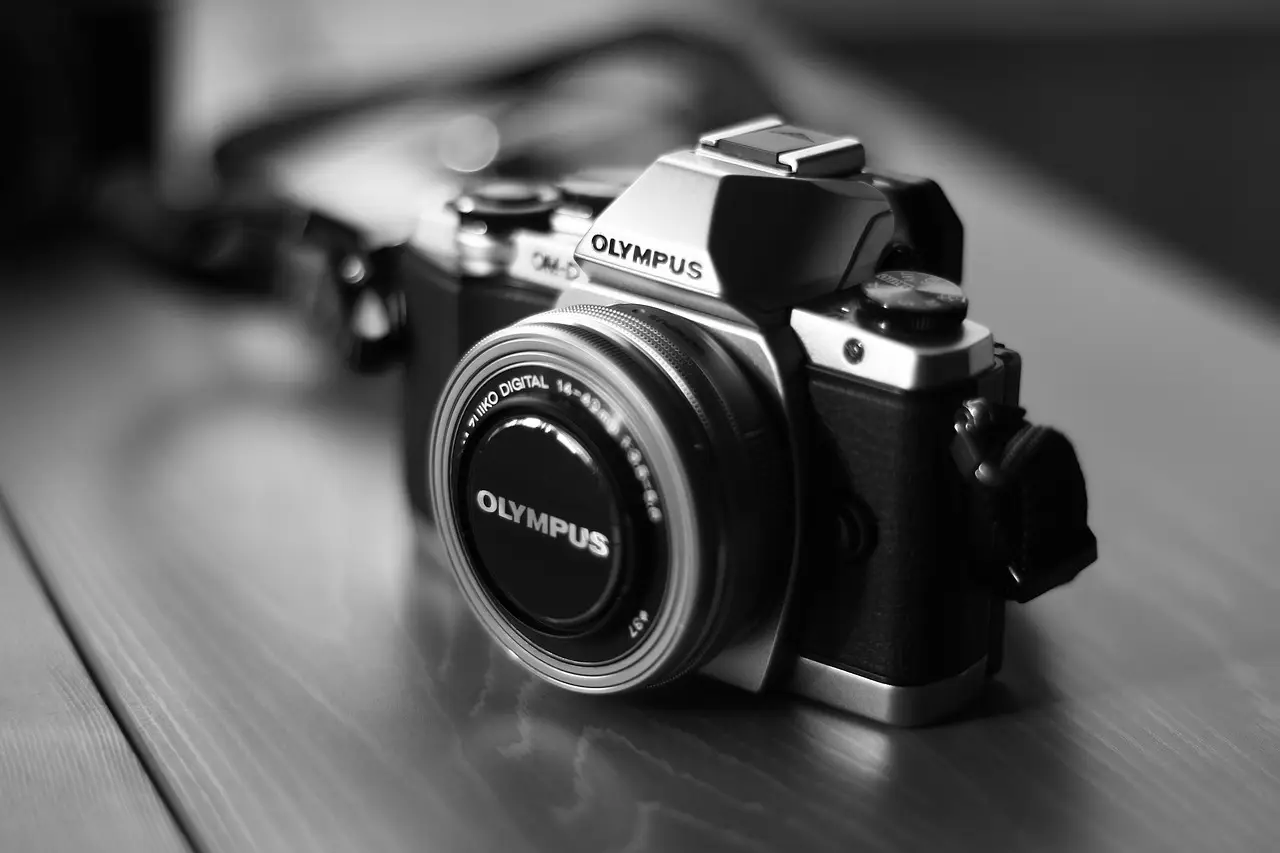
FR-E063ƒ/11 · 1/500 · ISO 400Roll /gear-industry
OM System Once Considered Full-Frame as Camera Sales Slump
OM System once considered full-frame cameras, while a PetaPixel podcast reports slumping camera sales, Canon price plans and Nikon's $14,000 120-300mm f/2.8.
Processing notes
- OM System executives said the company once considered full-frame cameras; no product was announced.
- Digital camera sales were described as slumping again, with no figures supplied.
- Nikon announced a $14,000 120-300mm f/2.8 lens.
- Canon was said to be preparing price increases because of a memory crisis.
- The first of 10 PetaPixel Print Shop drops opens Nov. 2, 2026 through Jan. 31, 2027.
By Nathan Brooks
OM System executives said the company once considered full-frame cameras, a disclosure that produced no body, launch date or price; Nikon separately announced a $14,000 120-300mm f/2.8 lens. Both items surfaced in a 92-minute PetaPixel Podcast recorded in an online studio with Riverside.
What does the OM System disclosure change?
The executives discussed “expanding into larger formats,” according to the episode outline, but supplied no body, sensor specification, launch date or price. The podcast documents consideration, not an announced camera; anyone treating the headline as a full-frame product announcement would be reading beyond the evidence.
For working photographers, nothing changes in current OM System buying plans. The company gives no compatibility, autofocus or lens-roadmap detail that would justify repricing a kit or moving glass budgets. The useful signal is strategic: OM evaluated a path outside Micro Four Thirds while retaining no public full-frame timetable.
That distinction matters for media businesses. A rumor becomes expensive when outlets publish specifications, pricing or availability that the manufacturer has not confirmed. Here, OM executives supplied the historical fact, but the segment stops short of turning that fact into a product.
What moved elsewhere?
The 10:42 segment says digital camera sales are “slumping again,” but gives no unit total, year-on-year comparison, region or maker split. For revenue planning, the claim signals pressure without quantifying whether the contraction comes from consumer cameras, professional bodies, lenses or another category. It supports caution, not a forecast.
At 13:41, the episode says Canon is preparing price increases because of a memory crisis. The outline provides no affected models, components, markets or effective date, so studios cannot yet model client quotes or replacement costs. A price announcement would matter; a supply explanation without model-level scope does not.
At 32:44, Nikon announced a 120-300mm f/2.8 lens priced at $14,000. That is a firm announcement, not a rumor, but the source lists no mount, shipping date, dealer stock or delivery volume. A headline price cannot tell a working photographer whether the lens will be procurable for an assignment.
At 38:19, Apple announced a touch-enabled MacBook Pro, followed by the podcast's question about macOS on iPad. No display, processor or release details appear in the outline. At 42:29, Ricoh is set to open a GR Space in New York City, although the outline gives no opening date or exact venue.
At 46:16, the outline lists Sony's new 50-megapixel smartphone sensor; it does not name a phone, sensor size, video specification or production phone. At 51:07, Sirui has a new $150 full-frame prime series, but the source gives no focal lengths, mount or availability. At 52:21, Goodwill reportedly sold a previously unknown Leica lens without knowing what it had; the outline supplies no identification, valuation or provenance.
Should toy cameras exist?
Sarah Teng and Chris Niccolls framed the 54:20 discussion with a direct question: “Should toy cameras exist?” The source reports no verdict, product proposal or client-use case. For professionals, the segment can frame a creative conversation, but it offers no workflow, output or business model to adopt.
What do the promotions actually offer?
A 04:55 segment carries the Print Shop promotion. WhiteWall's sponsor copy calls the company the best photo lab worldwide and cites eight TIPA Best Photo Lab awards as proof. PetaPixel says its partner will ship hand-crafted, fine-art pigment prints on museum-grade stock directly to buyers to preserve color and detail in real light.
The Print Shop comprises 10 limited-edition drops featuring PetaPixel team and partner-artist photographs. The first drop opens Nov. 2, 2026 through Jan. 31, 2027. Its promotion says those exact formats, papers, colors and frames will never be offered again after the edition closes.
WhiteWall's worldwide-best and quality claims come from sponsor copy. The award count, sales dates and product descriptions are checkable details, but buyers still have to assess paper, framing, color and delivery against a specific print job.
B&H Photo's offer covers the Payboo Credit Card. It advertises an instant “Save the Tax” payment on eligible purchases shipped to eligible states, or financing over six or 12 months on minimum purchases of $199 or $599, respectively. Terms and credit approval apply, and Comenity Capital Bank issues the accounts. Those are financing and promotion conditions, not camera-market performance data.
What should professionals watch?
PetaPixel invites comments on YouTube and through SpeakPipe, sells merchandise through store.petapixel.com, and discloses that affiliate links may earn commissions. Later segments cover listener updates at 1:08:50, tech support at 1:15:43 and a feel-good story at 1:32:43, without further product or market detail.
The practical next checks are concrete: Canon's affected products and dates, Nikon's shipping window, any OM roadmap, and published specifications and availability for Apple, Sony, Sirui and Ricoh. Until those land, professionals should price client work and gear purchases against confirmed availability, not the episode's louder headlines.
via printshop.petapixel.com (Original)
More from Nathan Brooks
Show full bio
Correspondent covering regulation, policy and their impact on professional photography industry at Photo Trade Wire.
102 articles