FR-4848ƒ/8 · 1/125 · ISO 400Roll /gear-industry
Pentax Ends Production of Five K-Mount Lenses as DSLR Wind-Down Continues
Dealer reports confirm Pentax has ended production of five K-mount lenses, including the 16-85mm and 150-450mm, shortly after Ricoh discontinued its last K-series DSLR.
Processing notes
- Pentax has ended production of five K-mount lenses: HD DA 16-85mm f3.5-5.6, DA 18-135mm f3.5-5.6, HD DA★ 35mm f2.8 Macro Limited, DA 300mm f4, and HD D FA 150-450mm f4.5-5.6, per dealer MAP CAMERA and Japanese media.
- Ricoh Imaging announced this month it is discontinuing all current K-series DSLRs, including the K-1 II, while promising a "new series of digital SLR cameras based on an entirely new concept" with no specs or timeline.
- The discontinued lenses date from 2010 to 2014, and K-mount shooters now face limited options: keep gear until failure, exit the system, or stock new-old-stock or second-hand bodies and lenses.
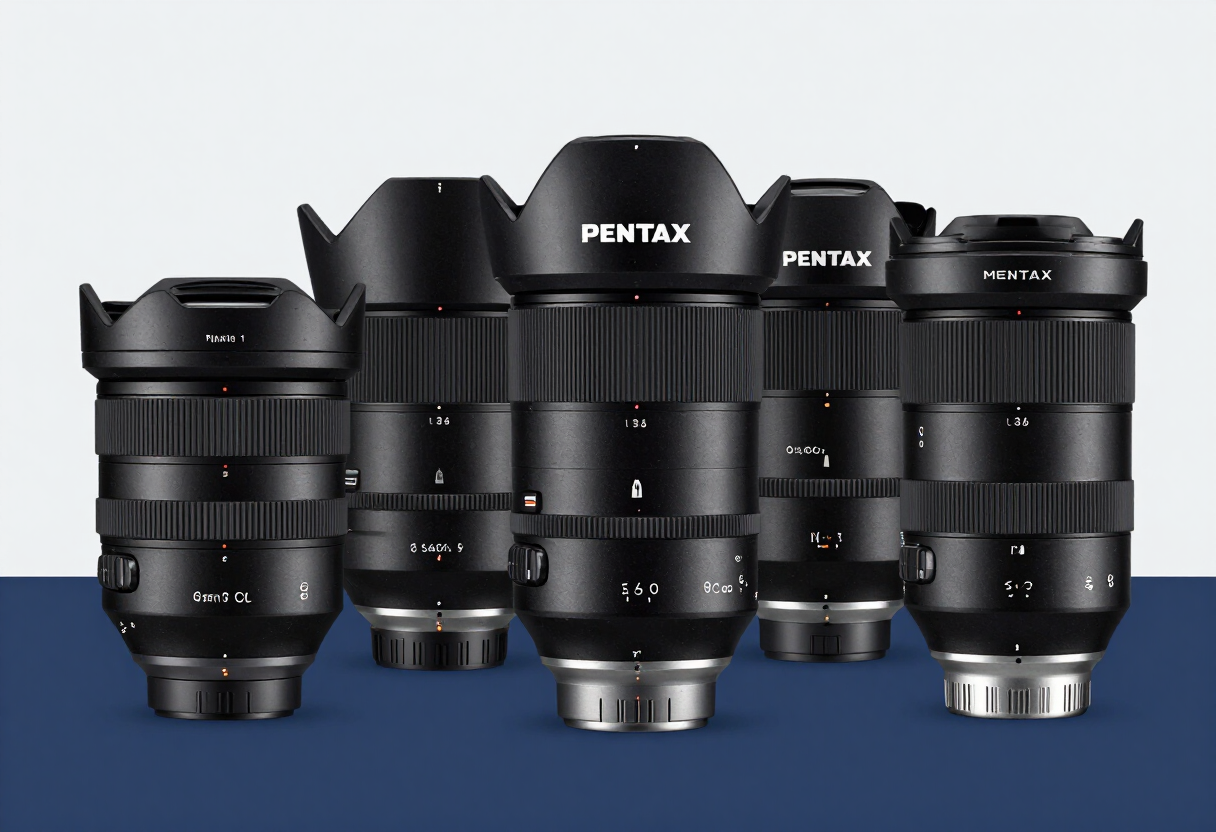
Five Pentax K-mount lenses have reached the end of production, according to reports from Japanese dealers first surfaced by Asobinet. The list includes the HD PENTAX-DA 16-85mm f3.5-5.6 ED DC WR, the PENTAX-DA 18-135mm f3.5-5.6 ED AL [IF] DC WR, the HD PENTAX-DA ★ 35mm f2.8 Macro Limited, the PENTAX-DA 300mm f4 ED [IF] SDM, and the HD PENTAX-D FA 150-450mm f4.5-5.6 ED DC AW.
Ricoh Imaging has not issued an official announcement naming the lenses. Japanese dealer MAP CAMERA has listed the five optics as out of production, and Japanese media picked up the dealer notice. The same pattern preceded earlier camera discontinuations: unofficial dealer reports surfaced first, and Ricoh confirmed later. That happened with the K-1 and most recently the K-1 II.
The timing matters. Earlier this month, Ricoh Imaging confirmed it is ending production of all current Pentax K-series DSLRs, with the K-1 II the last to go. In the same statement, the company pointed to future plans: "While it will take time for these products to come to life, we will leverage the K-mount legacy that was built over more than half a century, to develop a new series of digital SLR cameras based on an entirely new concept. We will provide updates on the progress of the product development as we have more information to share."
What the discontinued lenses cover
The five optics span the core of the APS-C and full-frame K-mount system. The 18-135mm dates to September 2010 and shipped as a high-end kit lens for the K-5 and subsequent DSLRs. The 16-85mm and 150-450mm both arrived in 2014, aimed at portrait and wildlife work respectively. The 35mm Macro Limited and the 300mm f4 sit in Pentax's Limited and star lens lines, serving macro and sports shooters.
All five are at least a decade old. That makes the discontinuations commercially unremarkable on their own — manufacturers retire long-running SKUs routinely. The significance is systemic: with every current K-series body and now a broad slice of the lens catalog gone, the working K-mount system is contracting to whatever remains in stock and on the second-hand market.
Reading Ricoh's promise
The company's statement commits to a "new series of digital SLR cameras based on an entirely new concept," but offers no specs, no timeline and no format details. Ricoh has leaned on brand philosophy — "the joy of photography" — rather than product roadmaps. The one recent precedent, the Pentax 17 half-frame compact, lost its designer TKO, who has left the company, raising questions about how quickly any follow-up arrives. Ricoh is also a small player next to Fujifilm, which constrains development resources for a niche DSLR line.
For working photographers, the practical reading is straightforward: treat any new K-mount body as a rumor until Ricoh ships one.
What K-mount owners should weigh now
The discontinuation changes the repair-and-replacement calculus for anyone earning money on K-mount glass. Three options remain. First, keep shooting existing bodies and lenses as long as they function — but with production ended across the line, parts and service availability will only tighten, so an unfixable failure becomes a realistic business risk. Second, exit the system while residual value holds. Third, buy and stock a body and kit lens now, while new-old stock exists, or source second-hand gear from eBay.
Pentax held a distinctive position as one of the last manufacturers investing in DSLRs while the market shifted to mirrorless. DSLRs retain real advantages for some working photographers: optical viewfinders, sturdier bodies, and a rendering character some clients and shooters prefer. None of that changes the supply-side reality — the platform is now effectively frozen.
Until Ricoh details the promised new-concept SLR — with specifications, availability dates and pricing — K-mount shooters planning multi-year gear investments should assume the current system is what they will be working with.
via asobinet.com (Original)