FR-CBC2ƒ/11 · 1/60 · ISO 400Roll /gear-industry
Apple's $400 PROLED MacBook Pro: Best Laptop Display Tested, 15% Lighter
Apple's $400 PROLED MacBook Pro premium buys the best-tested display ever — 102.3% Adobe RGB, Delta E 1.08 — plus 15% less weight and identical M5 Max performance. Touch is beside the point.

Processing notes
- PROLED MacBook Pro costs $400 more than standard M5 Max model
- Measured 148.5% sRGB, 102.3% Adobe RGB, 105.2% DCI-P3 with Delta E 1.08 in Photography preset
- 14-inch and 16-inch models are both 15% lighter, at three and four pounds
- 1,000 nits full-screen, 2,000 nits peak HDR, 10,000,000:1 contrast ratio
- Standard LCD option likely disappears with M6 Max refresh in one to two years
Apple's MacBook Pro with PROLED display costs $400 more than the standard M5 Max model and delivers the best display one longtime tester has measured: 148.5% sRGB, 102.3% Adobe RGB and 105.2% DCI-P3 coverage with an average Delta E of 1.08. Those numbers matter to any photographer grading or delivering client work on a laptop — and they beat Apple's own Studio Display XDR.
The launch event in Los Angeles last week leaned hard on touch control, the feature Steve Jobs famously dismissed as a "great demo" that fatigues users fast. The reviewer, echoing Marques Brownlee's day-of reaction, largely agrees. No Apple Pencil support, an uncomfortable reach in Logic Pro, a hinge that bounces under finger pressure — touch feels bolted on, not designed in. It can be disabled outright in Accessibility settings.
What does the $400 actually buy?
Three things: the display, the weight cut, and the speakers.
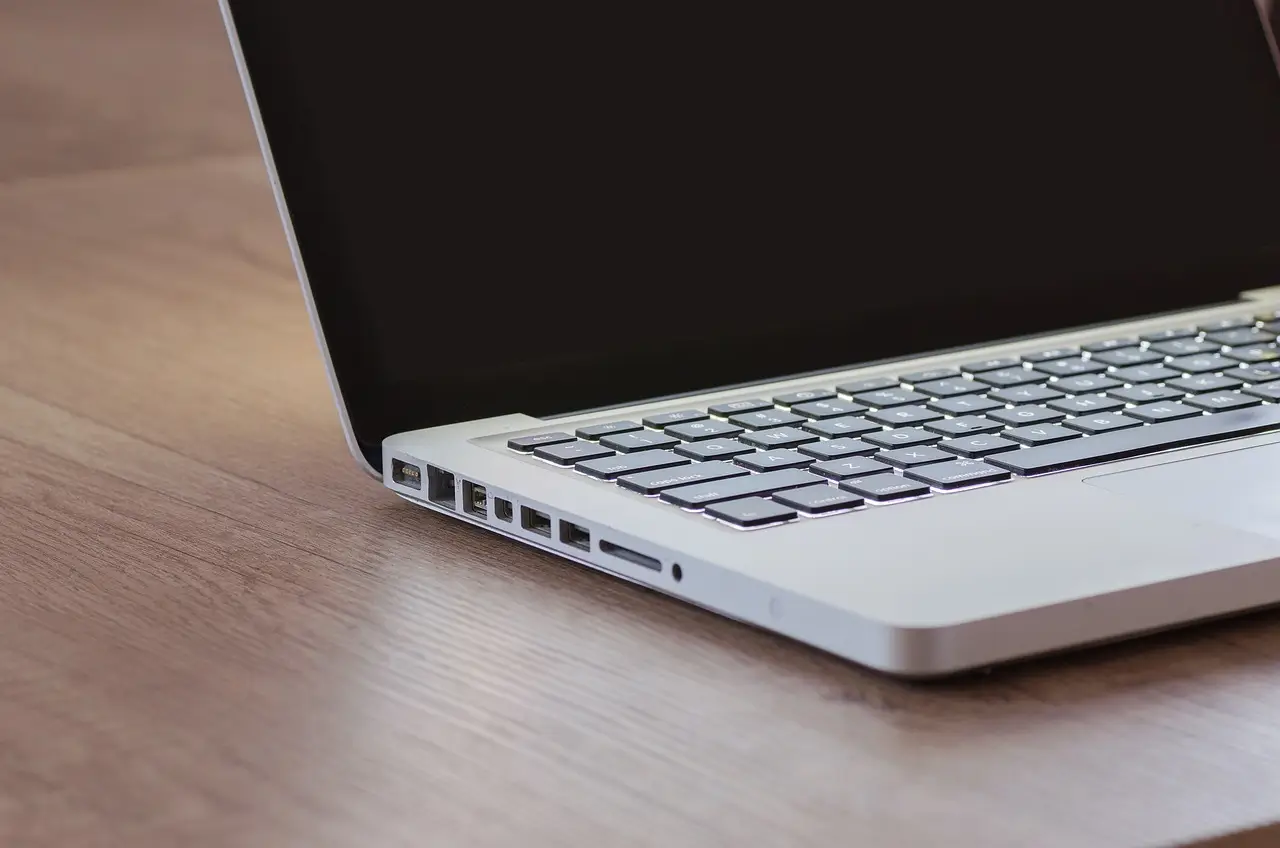
The 16-inch PROLED is 15% lighter at four pounds; the 14-inch is 15% lighter at three pounds. Both are thinner, at 1.60 cm and 1.50 cm respectively. The 16-inch's actual panel area grows to 16.3 inches, the 14-inch to 14.2. For photographers hauling a machine in a shoulder bag daily, that's the practical win — and Apple kept every port: three Thunderbolt 5, SD card reader, full-size HDMI, 3.5mm jack, MagSafe.
The tandem OLED panel stacks two electroluminescent layers sharing current load. That yields 1,000 nits full-screen SDR/HDR brightness, 2,000 nits peak HDR, a 10,000,000:1 contrast ratio, true blacks, and no backlight blooming. Apple says its silicon-integrated display engine runs real-time compensation using content, per-pixel usage history, temperature and ambient light — active uniformity compensation runs continuously from 1 nit to 1,000 nits to fight burn-in. Apple rates 89-degree viewing angles with minimal off-axis shift.
Apple spec'd only 81% BT.2020 in its white paper and promised no sRGB, Adobe RGB or P3 figures. So the reviewer ran his own tests at maximum brightness, twice.
- Default settings: 137.1% sRGB, 94.5% Adobe RGB, 97.1% DCI-P3, average Delta E around 1 — already better than the Studio Display XDR.
- Photography (P3-D65) preset: 148.5% sRGB, 102.3% Adobe RGB, 105.2% DCI-P3, Delta E 1.08 — the first display he's tested to top 100% in all three. A longtime industry colleague checked six-plus years of his own results and found nothing better than 100/100/99.
- A 9×5 uniformity test showed pristine panel consistency edge to edge. Verdict: "the best display you can buy right now," full stop.
On Nano Texture: skip it, this time. The glossy panel handles reflections well, and matte coating measurably degraded contrast at angles. Protecting OLED's perfect blacks wins.
Performance, battery, and the M6 question
Performance is unchanged from the M5 Max MacBook Pro reviewed in March — benchmarks showed statistically insignificant differences, to the point the numbers weren't republished. Same output from a smaller chassis points to a redesigned thermal system, visible only in a split exhaust port design.
Battery held 48% after roughly two hours of doubled benchmark runs on battery power, hammering CPU, GPU and fans. Apple quotes up to 24 hours video streaming and 17 hours web browsing on the 16-inch. Wi-Fi 7, Bluetooth 6, and support for up to four displays on the M5 Max — including two Studio Display XDRs at 5K/120Hz over a single Thunderbolt 5 cable. Speakers improved slightly, especially lid-closed, though the bar was already high.
What does this change for buyers? The standard M5 Max at $400 less remains performance-identical — a legitimate alternative while it lasts. But expect that choice to disappear when Apple refreshes the MacBook Pro with M6 Max, likely next year or the year after, leaving the premium display as the only option. Anyone investing $2,000-$3,000 minimum in a work machine between now and then faces a simple call: pay $400 for the reference-grade panel and lighter carry, or grab the last cheaper configuration while it exists.
via youtube.com (Original)
More from Nathan Brooks
Show full bio
Correspondent covering regulation, policy and their impact on professional photography industry at Photo Trade Wire.
101 articles