FR-1A02ƒ/8 · 1/500 · ISO 400Roll /industry-news
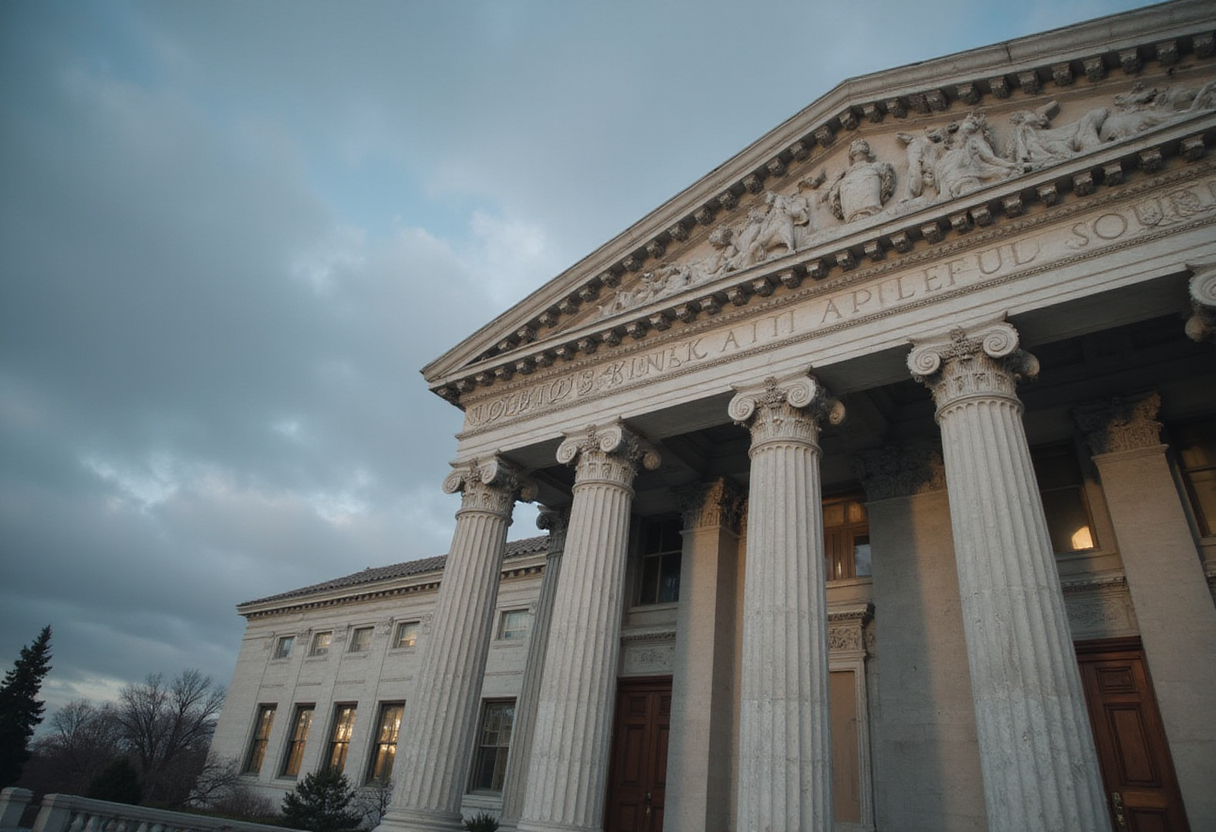
European Court Awards Photographer Damages Over Greek Police Strip Search
The European Court of Human Rights has awarded damages to a photographer strip-searched by Greek police, setting a precedent that applies across 46 Council of Europe member states.
Processing notes
- The European Court of Human Rights awarded damages to a photographer strip-searched by Greek police.
- The ruling was reported by PetaPixel on September 29.
- ECHR rulings set precedents applicable across the 46 Council of Europe member states.
The European Court of Human Rights (ECHR) has awarded damages to a photographer who was strip-searched by Greek police, a ruling that lands squarely in the middle of an ongoing debate over how working photographers are treated by law enforcement in the field.
The details of the award, first reported by PetaPixel on September 29, remain limited at this stage. What the record establishes is the core fact: a photographer detained in Greece was subjected to a strip search by police, and the Strasbourg court found the treatment serious enough to justify financial compensation. For a court that weighs state conduct against the European Convention on Human Rights, a damages award signals more than a procedural misstep. It is a formal finding that the photographer's treatment crossed a line.
Why should a commercial shooter or a photojournalist outside Greece care? Because the ruling touches the conditions under which photographers actually work. Anyone who shoots street assignments, protests, news events, or editorial commissions in unfamiliar jurisdictions faces some version of the same risk calculation: what happens when police stop you, and how far can a stop go? An ECHR judgment creates a reference point that applies across the 46 member states of the Council of Europe, not just Greece. Photographers working in those countries now have a precedent they can cite when a routine stop escalates.
The practical value is real but bounded. The ECHR operates after the fact. It does not prevent a strip search from happening on a sidewalk at night; it provides redress, sometimes years later. Photographers who work internationally already know this gap between legal protection and street-level reality. Assignment contracts, press credentials, and insurance riders do not stop a police officer from detaining a shooter with a camera. What they can do is shorten the aftermath: credential documentation supports identity claims, and a clear editorial commission on paper helps establish why the photographer was there at all.
There is also a business dimension that often goes unspoken. Detentions cost money. Lost shooting time, missed deadlines, confiscated or damaged gear, legal fees, and the psychological toll that keeps a freelancer from taking the next assignment in a difficult location — none of that appears in a damages line item. Awards from Strasbourg rarely make a photographer whole. They set a marker.
For agencies and editorial clients commissioning work in Greece and elsewhere in the region, the ruling is a reminder that duty-of-care planning for field photographers is not a formality. Risk assessments that cover police interaction, clear communication protocols during civil unrest coverage, and post-incident support are now standard parts of professional assignment practice.
It is worth noting what this ruling is not. It is not a finding that photography itself was the disputed act, and the public reporting so far does not detail the circumstances of the detention, the size of the award, or the timeline of the case. Those specifics will matter for anyone assessing how much protection the precedent actually offers.
What comes next is the practical question: whether the compensation, and the reasoning behind it, changes how Greek police handle photographers on the ground — or whether it remains a remedy that shooters can only reach after the damage is done.
via hudoc.echr.coe.int (Original)