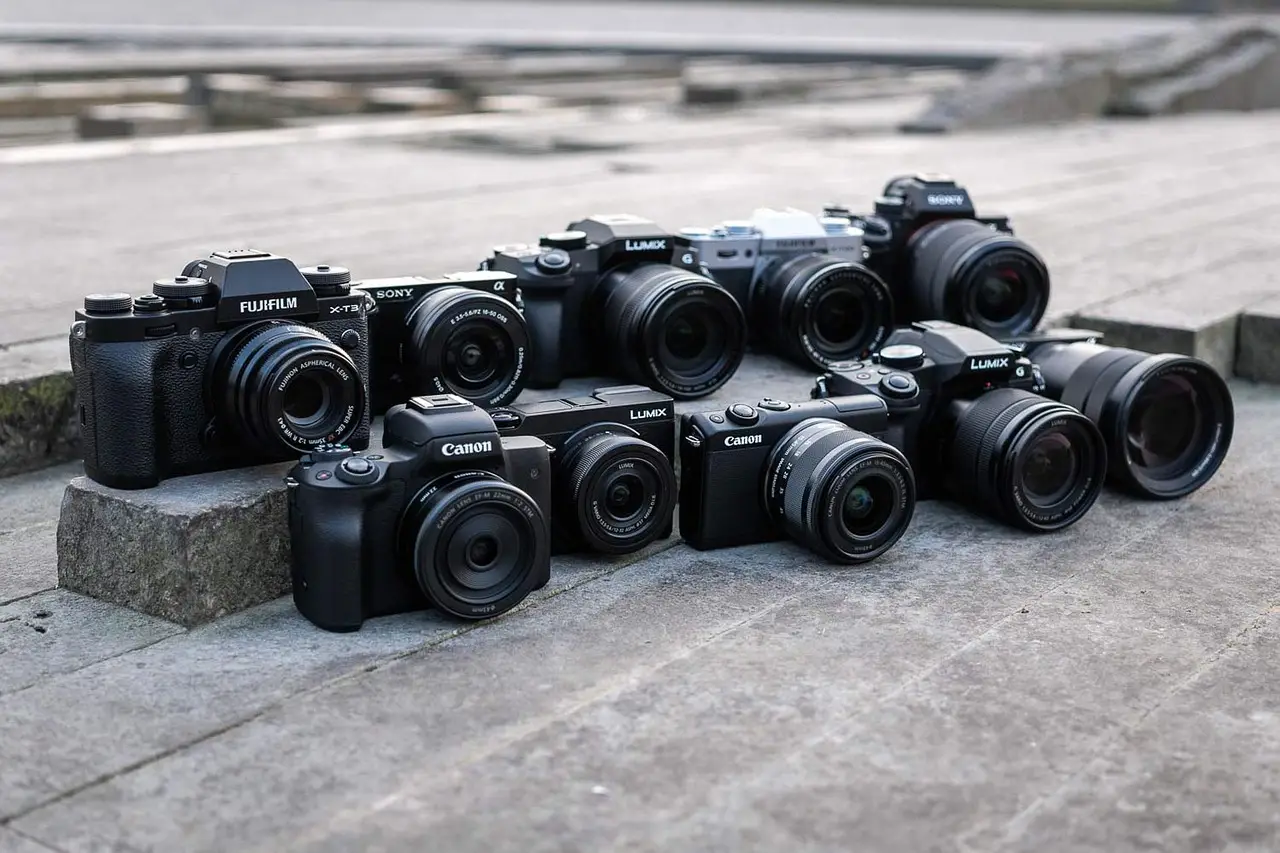
Fujifilm fixes X-series focus, burst and video-freeze bugs
Fujifilm’s Nov. 10 firmware releases for the X-T5, X-H2 and X-H2S fix manual-focus trouble with the XF 30mm macro, bracketing artifacts and video freezes.
Processing notes
- Nov. 10: Fujifilm released X-T5 firmware 4.32, X-H2 firmware 5.33 and X-H2S firmware 7.31.
- The updates correct manual-focus failure with the XF 30mm f/2.8 R LM WR Macro when Linear focus and a custom rotation angle are selected.
- They correct horizontal LCD lines in CH continuous shooting at 1/8000 sec or faster and in ISO or Film Simulation bracketing captures.
- The X-H2 and X-H2S releases correct occasional freezes about one minute into playback of video recorded at 6.2K or higher.
- Fujifilm says the releases also contain minor bug fixes but provides no details.
Fujifilm released firmware for three X-series mirrorless cameras on November 10: the X-T5 reached version 4.32, the X-H2 reached 5.33, and the X-H2S reached 7.31. Fujifilm hosts all three builds on its official support pages, so these are shipping fixes rather than roadmap speculation.
What changes for manual-focus shooters?
The most work-relevant repair concerns the XF 30mm f/2.8 R LM WR Macro lens. Fujifilm says a fault could prevent manual-focus adjustment when the camera’s “Focus Ring Operation” is set to “Linear” and a photographer selects a custom rotation angle. The firmware restores normal adjustment in that configuration.
Linear focusing maps ring movement consistently to focus travel, which can make small corrections easier to judge. A custom rotation angle lets users control that response more closely, especially around close subjects where a slight focus shift visibly changes sharpness.
For photographers handling macro commissions, the value is operational rather than promotional: a focusing control that stops responding can disrupt a repeatable setup and force a slower workaround. That matters when small focus corrections determine whether a close-up sequence meets the brief.
Those benefits stay tied to one lens, one menu combination and the corrected behavior Fujifilm describes. The release information does not claim a broader manual-focus overhaul, and the source provides no independent test results. Fujifilm’s statement that normal focusing returns is a fix confirmation, not a measured performance claim.
Takeaway: Close-up shooters get a workflow repair, not a new focusing feature.
Do the burst fixes cover the display and the files?
Two horizontal-line faults also disappear in the releases, and they are not interchangeable. Fujifilm lists four conditions for the rear-LCD problem:
- CH continuous shooting is selected.
- The shutter mode is set to Mechanical + Electronic.
- The electronic shutter speed is 1/8000 sec or faster.
- Image Display is set to Continuous.
Under that combination, the rear LCD could show unwanted horizontal lines during high-speed continuous shooting. The issue affects monitoring, making it harder to judge frames while working through a fast client sequence.
A separate fault could place horizontal lines in captured photographs when photographers used ISO bracketing or Film Simulation bracketing. That difference matters because the file, not just the screen, may carry the artifact. It also narrows the claim: the release details address the specified LCD combination and those two bracketing modes, not every conceivable artifact in every shooting setup.
The source includes no independent field testing of the corrections. Owners who rely on those settings still need to verify the result in their own workflows rather than assume every symptom has disappeared.
Takeaway: One fix concerns the LCD; the other reaches the saved image, making the bracketing correction more consequential.
Do the updates solve high-resolution video freezes?
The X-H2 and X-H2S receive a more operational fix: an occasional camera freeze roughly one minute after playback starts on video recorded at 6.2K resolution or higher. For studios and editorial teams reviewing 6.2K material with clients, that narrow failure point can interrupt an approval or handoff session.
But the source does not identify the cause, affected codecs, storage conditions or whether any recorded file suffered damage; it describes a freeze, not data loss. Treating the patch as a corruption fix would go beyond Fujifilm’s stated correction.
Fujifilm also says the releases include other minor bug fixes, yet gives no details. Owners therefore cannot assess the benefit of those unspecified changes from the release information alone, which leaves the named focus, artifact and freeze corrections as the only specific claims.
Takeaway: The video patch targets a narrow playback freeze, not a documented file-corruption problem.
What should owners do now?
Fujifilm provides a separate official support page for each body. Its installation advice is basic but consequential: check the instructions, confirm the camera model and firmware version, and ensure the battery has sufficient charge before starting.
For working photographers, the update offers a way to remove documented interruptions without replacing hardware. The source provides no installation-time estimate, compatibility expansion or detailed list of minor fixes, so those points remain open questions rather than promised benefits.
Takeaway: Install the correct body-specific build after charging the battery; the broader benefit remains unspecified.
The next checkpoint comes when affected photographers test the three builds in their own macro, burst and 6.2K-review workflows; until then, Fujifilm’s stated conditions define the limits of these shipped fixes.
via whatdigitalcamera.com (Source)
Filed underFujifilmX T5X H2X H2sFirmware Updates
More from Tom Whitfield
Show full bio
Senior reporter covering technology and product news in professional photography industry at Photo Trade Wire.
144 articles