FR-04B4ƒ/2 · 1/250 · ISO 400Roll /gear-industry
Leica Prices Hammertone M-A at $8,000, M11-P at $10,950
Leica will release the $8,000 M-A Hammertone and $10,950 M11-P Hammertone worldwide on November 12, 2026, reviving a rare finish with roots in 1930s industrial design.
Processing notes
- The M-A Hammertone is a fully mechanical 35mm film camera priced at $8,000 / £5,700.
- The M11-P Hammertone has a 60MP full-frame sensor and costs $10,950 / £8,500.
- Both cameras go on sale worldwide on November 12, 2026.
- Leica’s 1964 MD Hammertone run comprised 10 cameras.
- A Hammertone-finished BP-SCL7 battery costs $200 / £160.
By Nathan Brooks
Leica will release two Hammertone-finished M-System rangefinders worldwide on November 12, 2026: the fully mechanical Leica M-A Hammertone at $8,000 (£5,700), and the digital Leica M11-P Hammertone at $10,950 (£8,500). The M11-P costs $2,950 (£2,800) more than the M-A.
Leica says both special editions retain the capabilities of their standard counterparts and avoid technology changes made only to justify another edition. For the M11-P, the changes center on the exterior; for the M-A, the standard mechanical layout remains intact.
A rare finish, reworked in Wetzlar
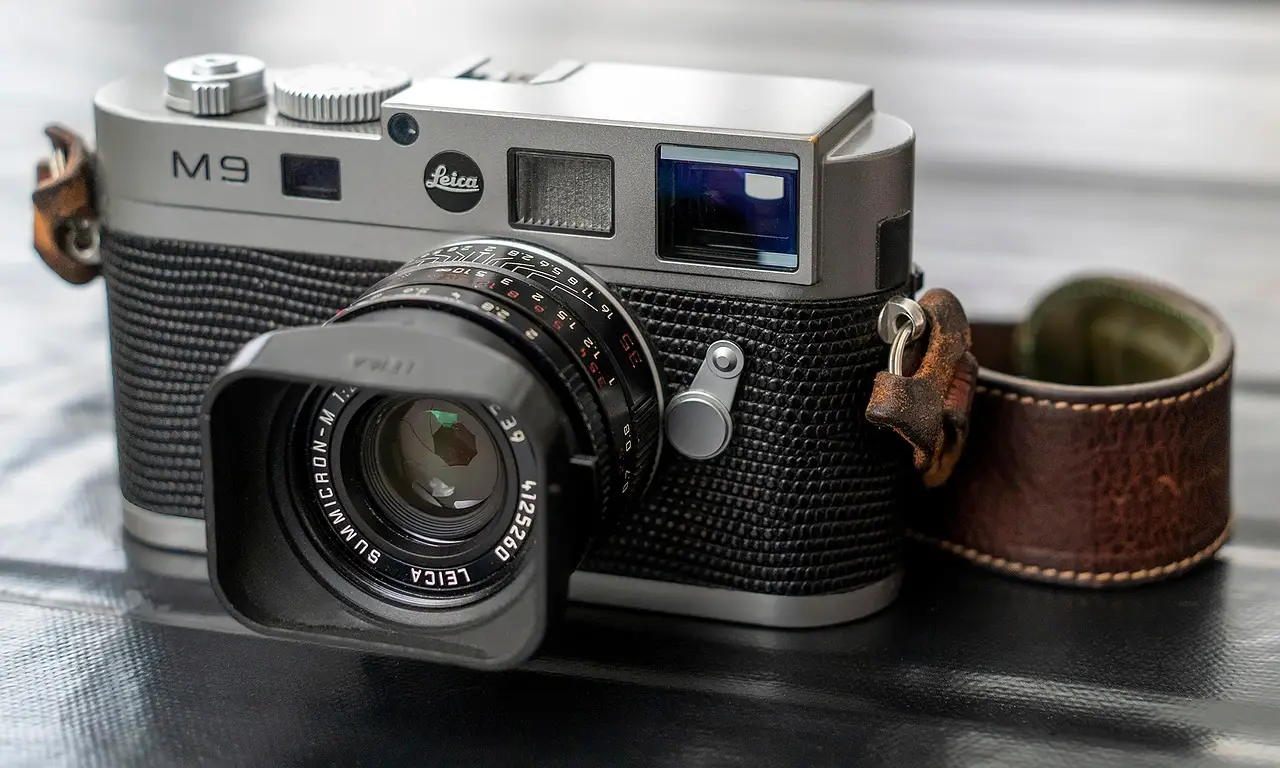
Hammertone became popular in industrial design in the 1930s, where its textured appearance was associated with durability and reliability. German manufacturer Leica has used it sparingly. Its most extreme earlier example is the 1964 Leica MD Hammertone, a run of only 10 cameras; later examples include the 2003 Leica MP LHSA and the 2011 Leica M9 Hammertone.
For the new cameras, Leica reworked the finishing process at its factory in Wetzlar, Germany, giving each body a unique surface texture. Both use solid brass top and base plates, traditional cross-knurled controls, white engravings and black vulcanite-style leatherette coverings.
Leica presents the finish as heritage design, not a quantified performance upgrade; the announcement makes no claim that the texture improves weather resistance or durability. It also gives no production total. Individual surface variation does not make every body a one-off, and buyers have no announced production number with which to judge eventual scarcity.
Mechanical core, unchanged
The M-A Hammertone remains a completely mechanical 35mm rangefinder based on the standard Leica M-A. It has no electronic assistance or automatic exposure controls. The photographer sets aperture and shutter speed, while sensitivity comes from the film loaded in the camera.
Against digital cameras’ growing reliance on autofocus and computational photography, Leica has preserved a deliberate manual workflow. The changes concern the finishing process, materials and historical details rather than added electronics. No new autofocus. No new exposure logic.
Digital model, standard feature set
Underneath its textured exterior, the M11-P Hammertone offers the familiar capabilities of the premium M11-P. Leica lists a 60MP full-frame back-illuminated CMOS sensor with Triple Resolution Technology, producing 60MP, 36MP or 18MP output. Internal storage totals 256GB, and the display uses scratch-resistant sapphire glass.
The camera includes Bluetooth, Wi-Fi and a wired connection. Leica says its Content Credentials technology can attach verifiable information about an image’s origin and editing history, giving commissioned and documentary photographers an additional provenance option at the file level.
Unlike the M-A, the M11-P has subtly rounded edges on its top and base plates, plus a silver-chrome front screw. Leica includes a specially finished BP-SCL7 battery with the camera. Additional Hammertone-finished BP-SCL7 batteries will also be available for $200 (£160).
What does this change for working photographers?
For working photographers, it changes finish and price, not much else. The M-A preserves a manual film workflow; the M11-P preserves the standard digital model’s sensor and feature set. For client work, the practical specifications remain 60MP selectable output, 256GB internal storage, Content Credentials and three wired or wireless connection options.
The price premium over standard M-A and M11-P cameras cannot be calculated from the announcement, which provides only special-edition prices. Buyers must decide whether the finish, brass construction and individually varied surfaces justify $8,000 for a mechanical film camera or $10,950 for a 60MP digital one. That is the commercial test.
Availability and scarcity
Leica Stores, the Leica online store and authorized retailers will carry both cameras worldwide from November 12, 2026. The finish history gives the editions a clear provenance, but without a stated production count their long-term scarcity remains a question rather than a guarantee. Availability is concrete. Scarcity is not.
via digitalcameraworld.com (Source)
More from Nathan Brooks
Show full bio
Correspondent covering regulation, policy and their impact on professional photography industry at Photo Trade Wire.
114 articles