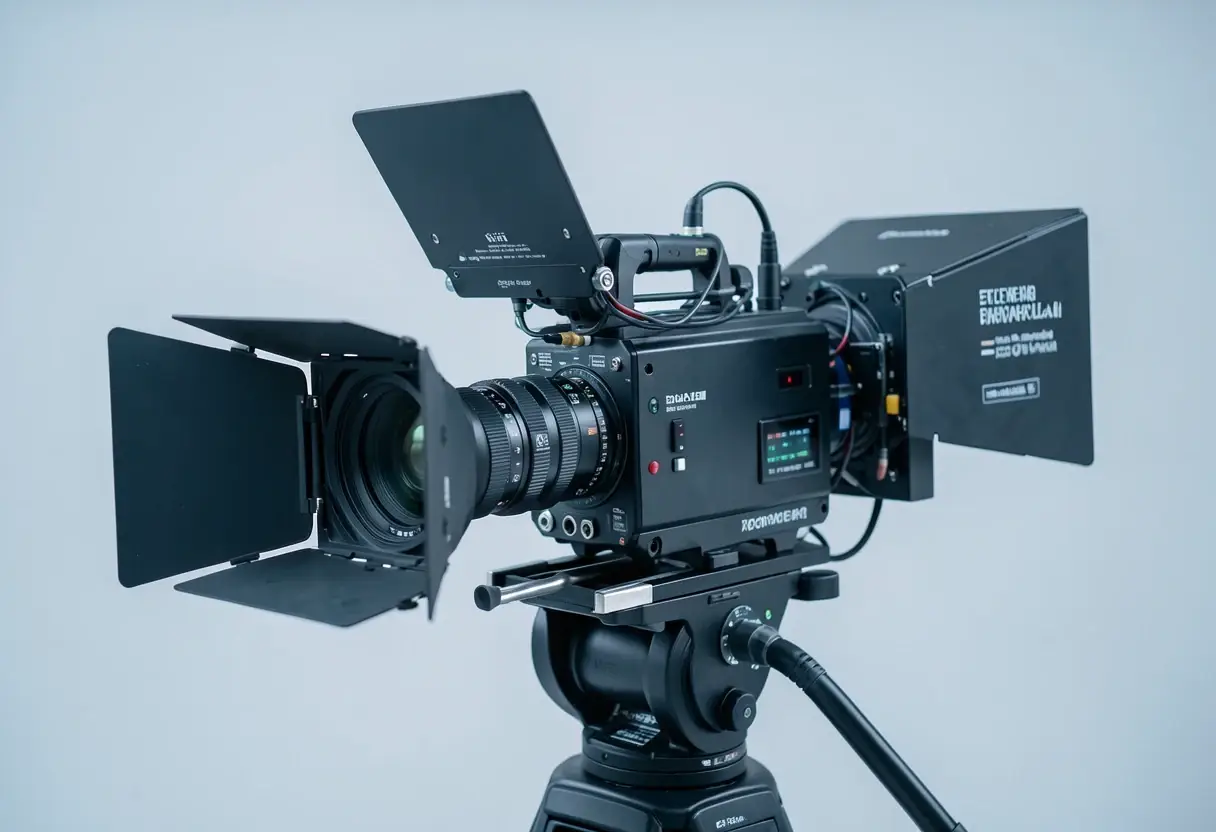
Panasonic's $4,699 SHX1 Puts S1 II Guts in a Cinema Box
Panasonic's $4,699 SHX1 packs the S1 II's 24.5MP sensor and class-leading IBIS into a 948g cinema box, but BRAW needs an external SSD and there's no internal ND.
Processing notes
- The Lumix SHX1 costs $4,699 body-only, or $5,499 with top handle, XLR adapter and side grip.
- It uses the S1 II's 24.5MP partially stacked full-frame sensor and adds an anti-aliasing filter.
- BRAW recording requires an external SSD; only ProRes RAW writes to CFexpress.
- A Live Production Unit, the AU-LPU1, ships in early 2027 for remote workflows.
- It weighs 948g and records 6K Open Gate up to 30P, 4K up to 120P indefinitely via active cooling.
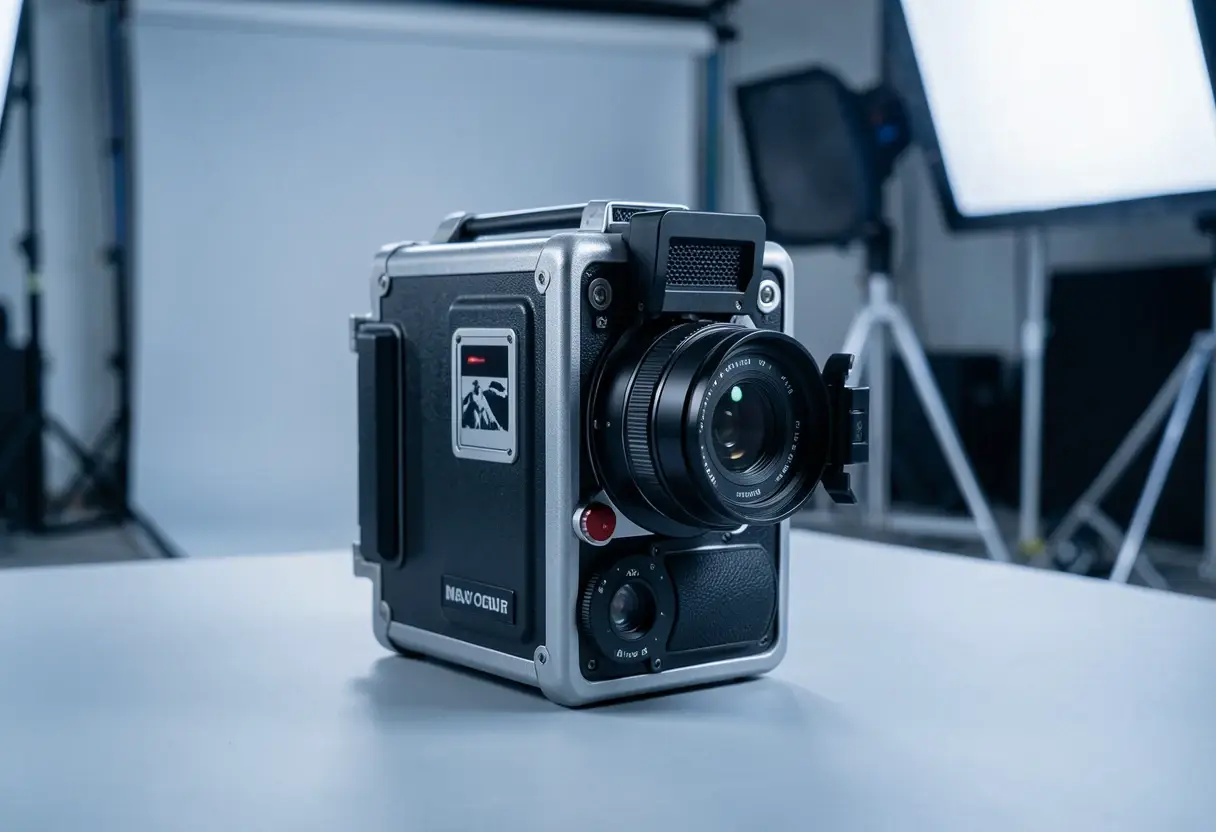
Panasonic has packaged the internals of its S1 II into a cinema box camera, the Lumix SHX1, priced at $4,699 body-only or $5,499 with an accessory kit. There is no S1H II. Instead of topping the S1 II, Panasonic moved its sensor and stabilization into a rig-friendly form factor — and for hybrid shooters, the value case gets murky fast.
The SHX1 shoots video only. No stills capture at all. So what does this change for working professionals? If you build rigs, fly cameras remotely or mount bodies in awkward places, quite a lot. If you're a content creator, the S1 II keeps nearly all the same video capability, adds an EVF and photography specs, and costs considerably less.
What's in the body
The camera weighs 948 grams (33.4 ounces) — RED Komodo territory — and breaks from Panasonic's earlier BG-Series box cameras by adding a top-mounted 1.84M-dot LCD with four-axis articulation. That articulation lets you shoot above eye-line, which top-mounted displays usually block. Dedicated exposure, Menu, Back and AF-On buttons are customizable, but reviewers found them mushy, with weak haptic feedback. Customization helps avoid menu diving.
Mounting points cover the top, right side and bottom. Power comes from Mini V-Mount batteries, most the same height as the camera itself. An active fan allows unlimited 4K/120p recording — the thermal edge over the S1 II matters for professional reliability in hot conditions.
The $5,499 kit adds a top handle, XLR adapter and side grip. The grip is large but near-essential; it brings extra custom buttons and an AF joystick. Unlike previous S-Series bodies, the SHX1 records 32-bit float audio through its 3.5mm jacks and internal mic without needing the XLR adapter. Storage runs to UHS-II SD, CFexpress Type B or external SSD. Locking SDI, timecode and full-size HDMI ports are standard. A Live Production Unit, the AU-LPU1, arrives in early 2027 for remote multi-camera workflows.
No internal ND filters. That's the price of the compact body — plan on screw-in filters or a matte box.
Image quality and the odd RAW limitation
The sensor is the same full-frame 24.5MP partially stacked unit as the S1 II, plus a new anti-aliasing filter against moiré. Testing showed negligible real-world difference; neither camera produced moiré on fabrics. Recording options are extensive:
- 6K Open Gate up to 30P; 5.1K full-sensor Open Gate up to 60P
- 4K up to 120P with sound
- MP4, MOV and ProRes at 10-bit
- 12-bit RAW in ProRes RAW or BRAW
Here's the baffling part: ProRes RAW writes to CFexpress, but BRAW requires an external SSD — despite BRAW's efficient 12:1 compression that a card could easily handle. Worse, attaching an SSD stretches startup time to nearly 10 seconds, enough to miss shots.
Video quality itself is outstanding, with strong detail and dynamic range even without Dynamic Range Boost. Log options include V-Log and ARRI LogC3. The standout is IBIS, unmatched in any box camera, and best with Panasonic lenses using Cropless stabilization. Autofocus is reliable with human and animal detection, if a step behind Sony's and Canon's latest.
Alternatives and verdict
The RED Komodo-X 6K ($4,995) and Blackmagic Pyxis 6K ($2,249) record compressed RAW internally but lack IBIS and trail badly on autofocus. Sony's FX5 counters with internal X-OCN RAW, optional EVF and stickier AF, though weaker stabilization. Event shooters likely favor the Sony; the SHX1 fits commercial and handheld documentary work better.
Verdict: buy it if the box form factor serves your rigs. Skip it otherwise. With the AU-LPU1 shipping in early 2027, Panasonic is clearly betting the SHX1's future on remote production workflows the S1 II can't touch.
via PetaPixel (Source)
More from Nathan Brooks
Show full bio
Correspondent covering regulation, policy and their impact on professional photography industry at Photo Trade Wire.
150 articles