FR-D41Cƒ/5.6 · 1/250 · ISO 400Roll /gear-industry
Google's Android XR Glasses Launch at $395, Made for iPhone Certified
Google's Intelligent Eyewear, built by Samsung, carries Made for iPhone certification. Frames start at $395, weigh 40-44 grams, and reach retail December 10.
Processing notes
- Intelligent Eyewear starts at $395 (Warby Parker) and $449 (Gentle Monster); pre-orders open today, retail December 10
- Frames weigh 40-44 grams with a 12-megapixel ultra-wide camera and nine-hour battery rated life
- Made for iPhone certification enables Wi-Fi Aware transfers; requires iPhone 13 Pro or newer
- Videos up to 90 seconds save to Apple Photos via the iOS companion client
- Bystander faces are redacted and voices filtered before cloud processing; media is not used for AI training or ad targeting
Google has announced Android XR audio glasses, branded Intelligent Eyewear, that carry Made for iPhone (MFi) certification — a first for the platform and a decision that opens the device to Apple's user base rather than confining it to Android handsets. Samsung manufactures the hardware, with frame designs licensed from Gentle Monster and Warby Parker. Pre-orders opened today, and retail availability follows on December 10.
The pricing structure matters for anyone weighing the device against camera glasses from competitors. Warby Parker Intelligent Eyewear ships in three frame designs starting at $395, in both optical and sun styles. Gentle Monster Intelligent Eyewear is available in the United States and South Korea from $449.
What are the core specifications?
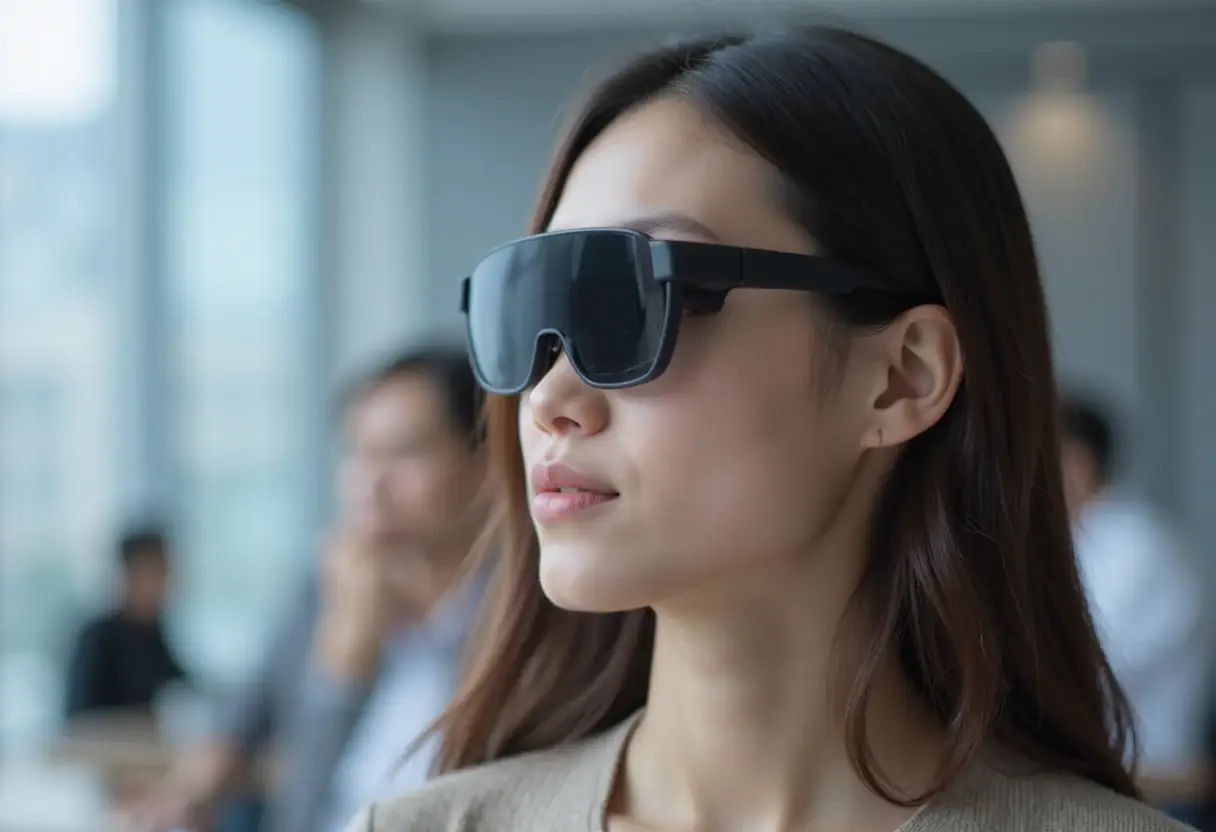
There are 30 unique designs across the two eyewear partners, and the frames weigh between 40 and 44 grams. Each pair carries a 12-megapixel ultra-wide camera, four microphones, and two open-ear speakers. Control comes through three channels: the "Hey Gemini" voice hotword, a touchpad that accepts taps and swipes, and a physical on/off switch that lets the glasses function as ordinary eyewear.
Battery life is rated at nine hours on a single charge, and the bundled charging case stores seven additional charges. For photographers, that rating is a manufacturer figure; real-world capture-heavy use will likely fall short, and Google has not published a breakdown of how camera and streaming workloads drain the cell.
How does the iOS integration work?
The Glasses companion client for iOS handles compute, including HDR processing, and saves images and videos up to 90 seconds long directly to Apple Photos. The MFi certification enables Wi-Fi Aware connectivity (a peer-to-peer protocol that links nearby devices without a router), which allows fast media transfers between the glasses and an iPhone.
On iOS, Gemini can place calls, send one-to-one messages including via iMessage, and surface notifications. The device requires an iPhone 13 Pro or newer — a floor that excludes a sizable portion of the installed base.
What happens to privacy and captured media?
A blinking white indicator light activates whenever the camera records content saved to the user's library. If that light is covered or disabled, the glasses stop recording, and Android XR runs a hardware check while charging to verify the mechanism. That hardware-enforced fail-stop distinguishes the design from software-only indicator approaches.
Gemini commands that use the camera, such as visual search or translation, do not trigger the light, because that media is not saved anywhere — including Gemini History. Before any such footage reaches the cloud, Google redacts faces from video feeds and filters out bystander voices, with the companion app performing the processing. Google states that this media is not used to train AI models or to target ads.
For working photographers shooting in public, the bystander redaction pipeline sets a precedent worth watching, since it shifts part of the consent question from the wearer to the platform.
What else can the glasses do?
Feature support includes turn-by-turn Google Maps directions, real-time translation, and streaming from Apple Music, Spotify, YouTube Music, and Audible — a list that signals Google's willingness to place Apple's service alongside its rivals.
The December 10 retail date gives the platform a presence in the holiday quarter, and the Gentle Monster launch limited to the US and South Korea suggests a deliberately narrow initial market. Whether the $395 entry point pulls iPhone owners into Google's ecosystem, or remains a companion gadget, will become clearer once independent battery and camera testing appears.
via 9to5mac.com (Source)
More from Amara Osei
Show full bio
Market editor covering companies, deals and strategy in professional photography industry at Photo Trade Wire.
131 articles