William Optics slims the Cat 51 by 7cm, trims 240g of glass
William Optics' fourth-gen Cat A-51 WIFD cuts 7cm and 240g, keeps a four-element Petzval at f/4.9 with a 48mm image circle, and launches at a $720.10 promotional price against a $758 list.
Processing notes
- $758 list price and $720.10 promotional price for the Cat A-51 WIFD, about 5% off and $37.90 under list
- Optical tube measures 229.4mm retracted and 266mm extended — nearly 7cm shorter than the previous Cat 51's ~298mm
- Tube weight falls from ~1.77kg to 1.53kg, a roughly 240g saving; 2.2kg with ring, handlebar and mounting plate
- 51mm aperture, 250mm focal length, f/4.9, four-element Petzval and a 48mm image circle covering full-frame, APS-C and Micro Four Thirds
- New retractable dew shield, improved Anti-Shrink lens cell, integrated camera rotator, tilt adjuster and Bahtinov mask; WIFD internal rack-and-pinion focuser retained
William Optics has priced its fourth-generation Cat 51 at $758, with a promotional price of $720.10 — roughly 5% under list — while cutting the packed optical tube to 229.4mm and trimming about 240 grams from the previous version.
The Cat A-51 WIFD keeps the four-element Petzval arrangement, 51mm aperture, 250mm focal length and f/4.9 ratio of the scope it replaces. What changed is the hardware around the glass: a retractable dew shield, a redesigned lens cell, a shorter tube, a lighter build. The internal focusing system stays.
That is the shape of the release. Here is what the numbers do.
What actually shrank?
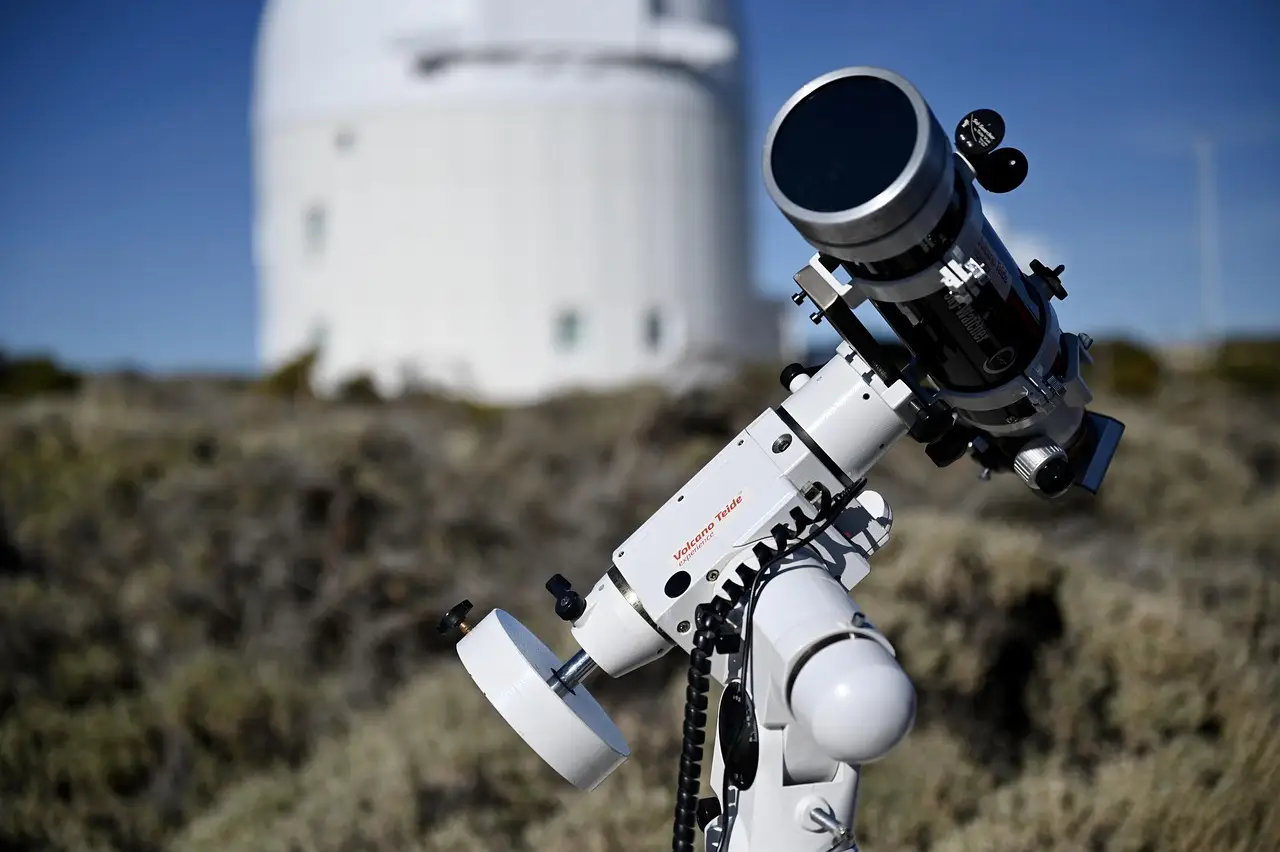
William Optics redesigned the front section so the dew shield slides back for packing. Retracted, the optical tube measures 229.4mm; extended, 266mm. The outgoing Cat 51 ran about 298mm, so the new scope is nearly 7cm shorter in the case.
Weight follows. The optical tube drops from roughly 1.77kg to 1.53kg, a saving of about 240g. William Optics lists 2.2kg for the complete scope with mounting ring, handlebar and mounting plate. A soft carrying case with accessory compartments ships alongside it.
For a working astrophotographer, that is a rig change, not a spec-sheet change: the scope that needed a dedicated wide-field carrier now fits standard mounting hardware and one padded bag.
Does the optics still earn their keep?
The four-element Petzval arrangement corrects field curvature inside the tube, so William Optics says the Cat A-51 WIFD produces a naturally flat field with no separate flattener — no extra glass, no extra spacing, no additional purchase.
- 51mm aperture, 250mm focal length, f/4.9 focal ratio
- 48mm image circle, covering full-frame sensors alongside APS-C and Micro Four Thirds
- Four-element Petzval design retained from the previous generation
- Rear M54 connection, with an M54-to-M48 adapter included
That image circle is the number that matters for a rental or studio rig: one scope serves a small-sensor body and a full-frame body without putting a reducer or an adapter in the imaging chain.
The company also revised the optical glass selection for this generation and upgraded the lens coatings. Neither change comes with a quantified transmission figure, so treat the imaging claims as marketing until third-party flat-field and throughput tests arrive.
The framing suits wide-field work — large nebulae with their surrounding star fields in one exposure. Targets cited for short-focal-length instruments include the North America Nebula, the Pleiades, the Orion Nebula and the Andromeda Galaxy.
Will the lens cell survive a cold night?
William Optics calls it the improved "Anti-Shrink Lens Cell." Built with optical-grade elastic materials, it moves with temperature swings rather than pressing unevenly on the glass, and the company claims it reduces the risk of pinched optics on cold nights.
The announcement offers no stress test, no measured cell travel and no tolerance figure, so the claim stays unquantified. For a buyer placing volume orders, that cell is exactly the part to make a dealer put in writing.
What does the focuser change for your rig?
WIFD — William Optics Internal Focus Design — keeps the focuser inside the tube near its center. The mechanism is a rack-and-pinion focuser compatible with electronic autofocus systems, and William Optics says a supported electronic focuser installs without an additional mounting bracket.
- Integrated camera angle rotator, so orientation changes do not mean re-aiming the whole mount
- Built-in tilt adjuster for sensor alignment
- Bahtinov focusing mask for focus checks
What does it cost, and when does it ship?
$758 list, $720.10 promotional — a $37.90 discount, or about 5%. William Optics traces the Cat line to 2019, with generations in 2021 and 2024 and this one called the 2027 model, even though the announcement itself is dated November 21, 2026.
No shipping window appears anywhere in the release, so nobody can schedule a delivery slot from the announcement alone. The $720.10 promotional price also carries no stated end date.
What it comes down to: for photographers running wide-field frames on full-frame bodies, the package is competitive — a 48mm image circle, integrated rotator and tilt adjuster, no flattener required, and a tube that travels better than the 298mm scope it replaces. The open questions are the ones the maker has not measured: coating throughput, lens-cell stress behavior, and how long the discount holds.
via DIY Photography (Source)
More from Nathan Brooks
Show full bio
Correspondent covering regulation, policy and their impact on professional photography industry at Photo Trade Wire.
150 articles